Gavarda makes most sense as a municipality with three settlements: the old village beside the Júcar, the new site chosen after the 1982 flood and the Villariezo neighbourhood. That geography brings traditional architecture, modern reconstruction, historic control of a river crossing and the citrus landscape of La Ribera Alta into one visit. The gaps between stops mean this is a short multi-stage route, not one continuous pedestrian circuit.
What to see in Gavarda
The old village and the memory of the flood
The old settlement retains streets of traditional houses surrounded by fruit fields. The official Comunitat Valenciana tourism portal recommends the parish church of La Purísima and the old public washhouse. The value of the area extends beyond two buildings: it shows how homes, the river and irrigated farmland once fitted together. The 1982 flood led to the selection of a new site for much of the population. Seeing both settlements explains a major urban transformation that a generic list of landmarks would miss.
Another institutional tourism source describes an 1870 parish church dedicated to Saint John the Baptist and Saint Anthony the Abbot. To avoid conflating dedications or buildings, this guide uses La Purísima for the old-village stop and directs visitors to local sources for worship and access details. Do not assume that the interior will be open.
The Napoleonic Battery
The Napoleonic Battery is Gavarda’s most distinctive historic structure. It was built in the early 19th century as part of the defensive works of the Peninsular War, between 1808 and 1814, to control a strategic Júcar crossing and halt advancing French troops. Its elevated position overlooks the Càrcer valley, farmland and communication routes. Part of the structure survives today. It should be interpreted as a territorial defence position, not as a complete castle.
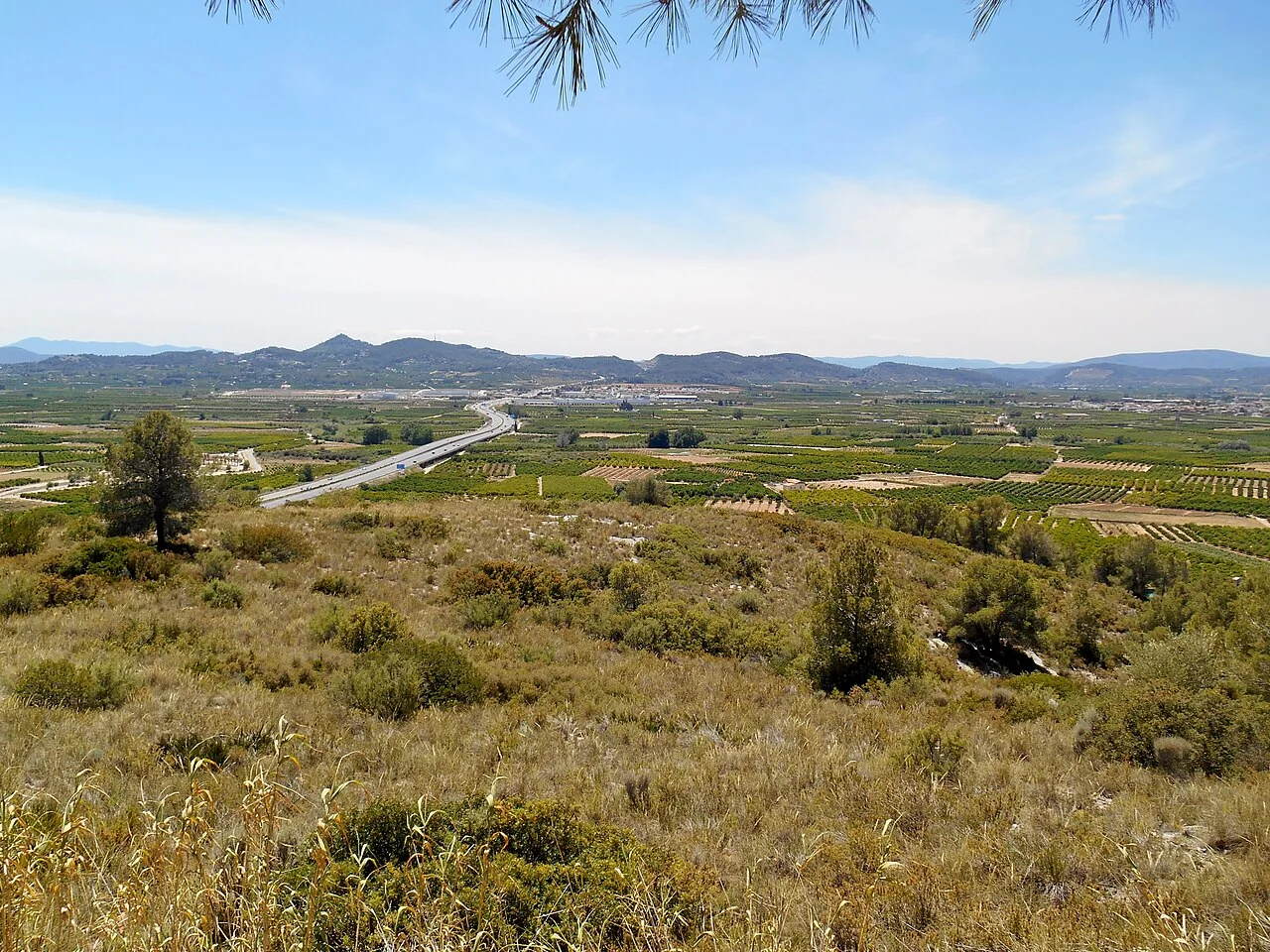
The featured photograph in this guide was taken from the battery. It shows crops, a road and distant hills rather than a view of Gavarda’s streets. Correct identification matters: the broad field of vision explains why this location was chosen for surveillance.
Bridges and the Júcar landscape
Pont del Rei
Pont del Rei, dated to the 18th century by the regional tourism authority, belongs to the history of communication across the river landscape. Check present access and choose a safe viewing position. Getting a photograph never justifies stopping on a road shoulder or entering private or restricted land.
The Iron Bridge between Gavarda and Beneixida
The 20th-century iron bridge over the Júcar provides a useful contrast with Pont del Rei and the much earlier strategic role represented by the battery. Together, the three places reveal different periods in mobility and control of the valley. Exercise particular caution after heavy rain: river level and the condition of riverside tracks are not constant.
A sensible route
- Old village: walk through the traditional streets and locate La Purísima and the washhouse while respecting residents.
- New settlement: note the change in urban scale and layout following the 1982 flood.
- Napoleonic Battery: connect the defensive remains with the wide view across the valley.
- One bridge: choose Pont del Rei or the Iron Bridge according to safe access and available time. Seeing both is optional.
Landscape, food and responsible visiting
The Júcar, the Acequia Real irrigation channel and citrus fields define Gavarda’s surroundings. València Turisme also mentions Cova de la Terreta, linked to the traditional collection of a type of earth once used for cleaning kitchens, and a fishing area called El Chorro. These references do not imply permanent unrestricted access. Caves, riverbanks and fishing can be subject to safety measures, permits or closures.
Local food shares the rice traditions of La Ribera: the provincial source lists baked rice, arròs amb fesols i naps and paella, together with arnadí, sweet-potato pastries and festive peanut biscuits. These are traditions rather than a guaranteed daily menu. Check restaurant opening hours and availability, especially on weekdays.
Practical information
For a half-day visit, use a vehicle only to connect the settlements and explore each stop on foot. Avoid peak summer heat, carry water and never climb onto deteriorated structures. After heavy rain, check municipal and 112 Comunitat Valenciana warnings before approaching the Júcar. Festival dates and church hours change and should be verified on the council website.
Related guides
Official sources consulted
- Comunitat Valenciana Tourism — Gavarda
- València Turisme — Gavarda
- Gavarda Town Council
- INE — official municipality register
Editorially reviewed on 22 July 2026. Opening arrangements, access and natural conditions can change; confirm operational details with official sources before travelling.
The editing date records changes to the text, not a new check of opening hours, telephone numbers or accessibility. Specific verification dates, where recorded, appear beside the relevant information.