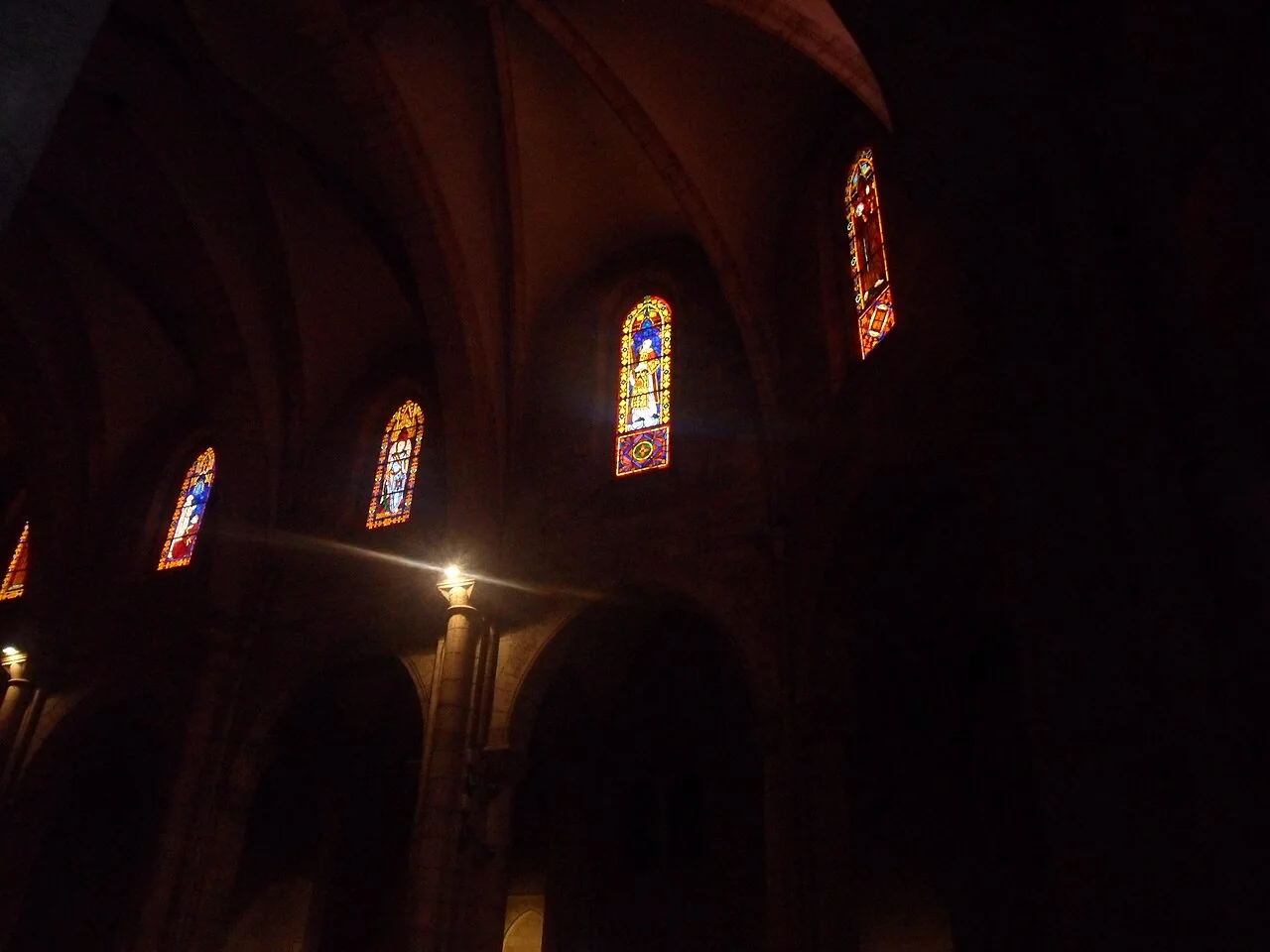
The photograph shows the nave of Santa Caterina Church in Alzira, with pointed arches and illuminated stained glass; it is not La Murta nature area. The church is an Asset of Cultural Interest in the historic centre, whereas the valley and former monastery lie outside the city.
Santa Caterina belongs to La Vila
The archpriest’s church has medieval origins and retains Gothic architecture, although its exterior image also includes a Baroque facade. It forms part of a walk through La Vila with the town hall, traces of Santa Maria and the walled enclosure. The urban route reveals exteriors and archaeological remains, but does not establish that every interior opens at the same time.
The walls explain former Al-Yazira
The historic quarter retains an irregular pattern, narrow streets and small squares. Crenellated wall sections and towers recall the settlement encircled by the Xúquer and its strategic position. The council’s Jaume I route links the patron-saint shrines, Constitution Square, Santa Caterina, town hall, Santa Maria and walls without treating them as one building or period.
La Murta is a separate natural and monastic destination
Remains of the Hieronymite monastery survive in La Murta valley, including Torre dels Coloms and the bridge to the ruined church. The complex lies in La Murta i la Casella Municipal Nature Area and requires travel and an outdoor route. Abandoned heritage does not mean an unregulated place or unrestricted access to every structure.
This documentary edit identifies Santa Caterina’s interior and distinguishes city from valley. It does not verify worship, opening, lighting, accessibility, works, La Murta booking, parking, water, trails, wildfire risk or ruin stability on site.
Related guides and local data
Sources consulted
- Ayuntamiento de Alzira — monumentos y espacios naturales
- Turisme Comunitat Valenciana — Alzira
- Ayuntamiento de Alzira — recorrido patrimonial de Jaume I
Documentary sources consulted on 31 August 2026. This is not an on-site inspection or a full check of opening hours, telephone numbers or accessibility. Any visiting conditions mentioned come from the linked sources.
The editing date records changes to the text, not a new check of opening hours, telephone numbers or accessibility. Specific verification dates, where recorded, appear beside the relevant information.