n
Sourced guide
Setting and character
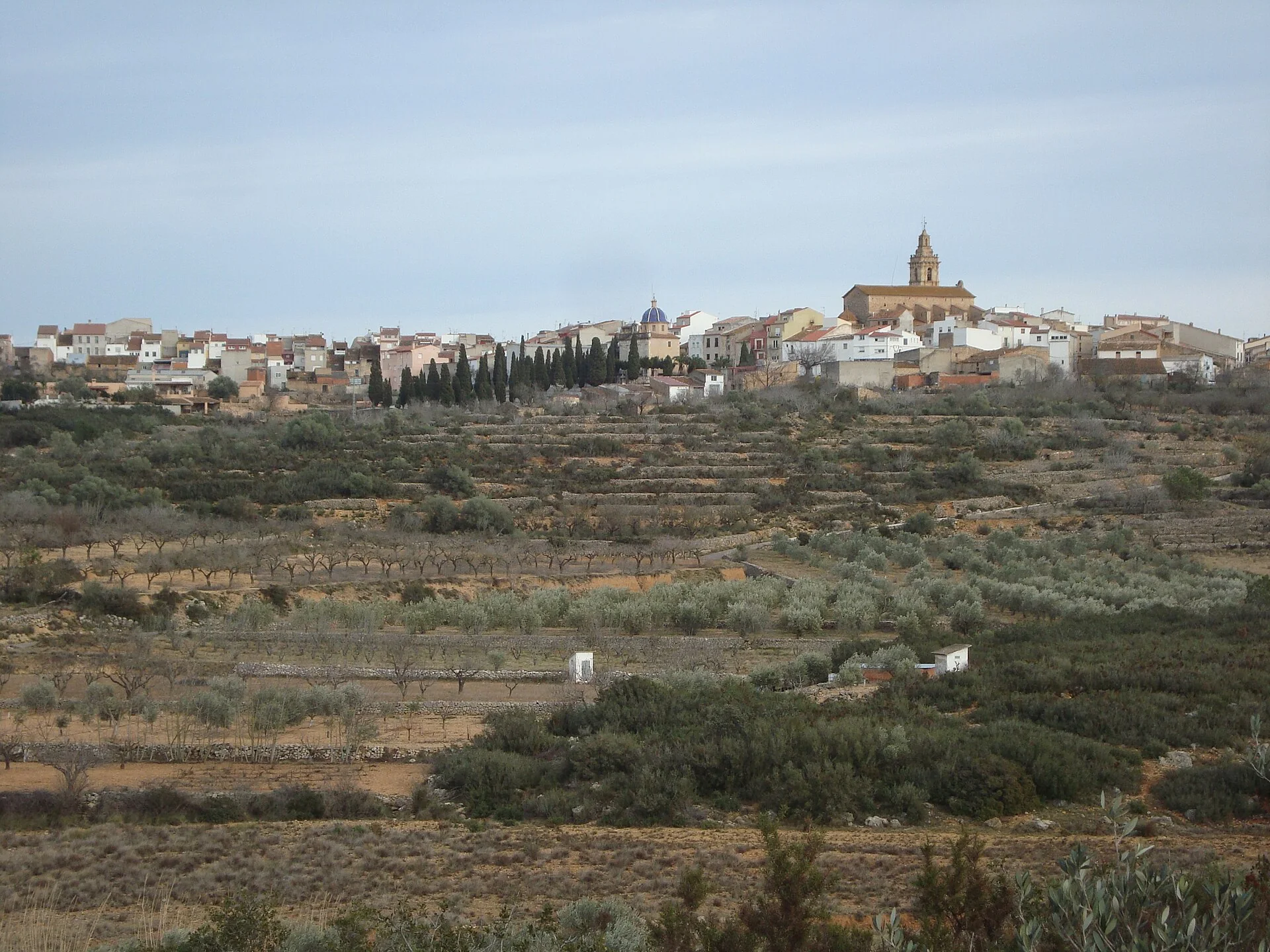
The featured panorama shows Vilanova d’Alcolea above dryland terraces with Sant Bartomeu defining the skyline; it is not the Roman site of Ildum. Correct identification separates two parts of the visit: the raised town, shaped by medieval settlement, and the Via Augusta corridor beside the northern approach, where the archaeological site of l’Hostalot is located.
Documented heritage
The council tourism plan identifies l’Hostalot with the Roman mansio of Ildum. Its position beside the Via Augusta gained strong evidence in 1992 when road works uncovered a milestone erected under Caracalla in AD 214; its recorded distance agrees with ancient itinerary sources. This is an archaeological site, not a reconstructed attraction. Ask the council about access, visible remains and any guided visit before travelling.
Landscape and territory
Some wall sections associated with the medieval enclosure remain in the town. Sant Bartomeu church was built in 1707 and altered during the eighteenth century; its Classical doorway dates to 1740 and the Baroque altarpiece is attributed to the Capuz brothers. The bell tower defines the agricultural skyline. Do not promise tower entry simply because a listing describes the view: permission and safe arrangements are required.
How to organise the visit
The hillside Calvary contains fourteen stations. Its hermitage dates to 1809 and preserves paintings by Joaquim Oliet, while some station chapels include ceramics from l’Alcora and Onda. The climb provides context over roofs and fields but involves a gradient. A coherent town route links the church, wall traces and Calvary, keeping l’Hostalot and the Via Augusta for a separate journey.
Food, boundaries and context
Carob, almond and olive trees and vines structure the dryland landscape. Castellón tourism also identifies monumental Farga olive trees in northern rural plots, where working agriculture and property boundaries govern access. Ask about locally available oil and cooking rather than inventing a unique dish. Cabanes or les Coves de Vinromà can extend the day as clearly separate municipalities.
Responsible planning
When planning a visit to Vilanova d’Alcolea, check the linked council or tourism page, the weather forecast and any notices about fire risk, works or festivities. Churches are not museums with permanent opening hours, while farms, terraces and houses mentioned may be private. Carry water and suitable footwear, avoid blocking narrow streets and never enter riverbeds, ruins or closed structures. Timing depends on gradient, mobility and stops, so keep the town walk separate from a mountain route or an outlying drive.
How to use this information
For Vilanova d’Alcolea specifically, the linked sources support the names, dates and features used to explain the municipality, but they do not replace a real-time check. A heritage record may remain historically accurate even when access, signs or the building’s use changes. This guide therefore separates established facts from variable recommendations and does not promise admission, tours, toilets or food service. Where institutions provide different dates, they are treated as phases or the discrepancy is stated instead of being hidden.
When exploring Vilanova d’Alcolea, accessibility differs greatly between a square, hermitage, viewpoint and trail. Anyone needing step-free routes, adapted public transport or accessible toilets should confirm them with the council before travelling. Bus frequency, taxis and charging points can also vary in small villages. Save useful contact details, download a map before leaving the settlement and allow enough daylight to return. No scenic reference is permission to cross private property or continue in poor weather.
Frequently asked questions
How much time should I allow?
For Vilanova d’Alcolea: Allow roughly one to four hours for the settlement and plan the described routes or outlying sites separately.
Are interiors and natural sites always accessible?
For Vilanova d’Alcolea: No. Confirm opening times, permission, trail condition and restrictions through official sources before travelling.
How is this different from a generic template?
For Vilanova d’Alcolea: Every place, date, image and municipal boundary has been checked for this municipality, with the supporting sources linked below.
Related guides and local data
Official sources and verification
n
The editing date records changes to the text, not a new check of opening hours, telephone numbers or accessibility. Specific verification dates, where recorded, appear beside the relevant information.
2 thoughts on “Vilanova d’Alcolea: Ildum, Sant Bartomeu and the Calvary”