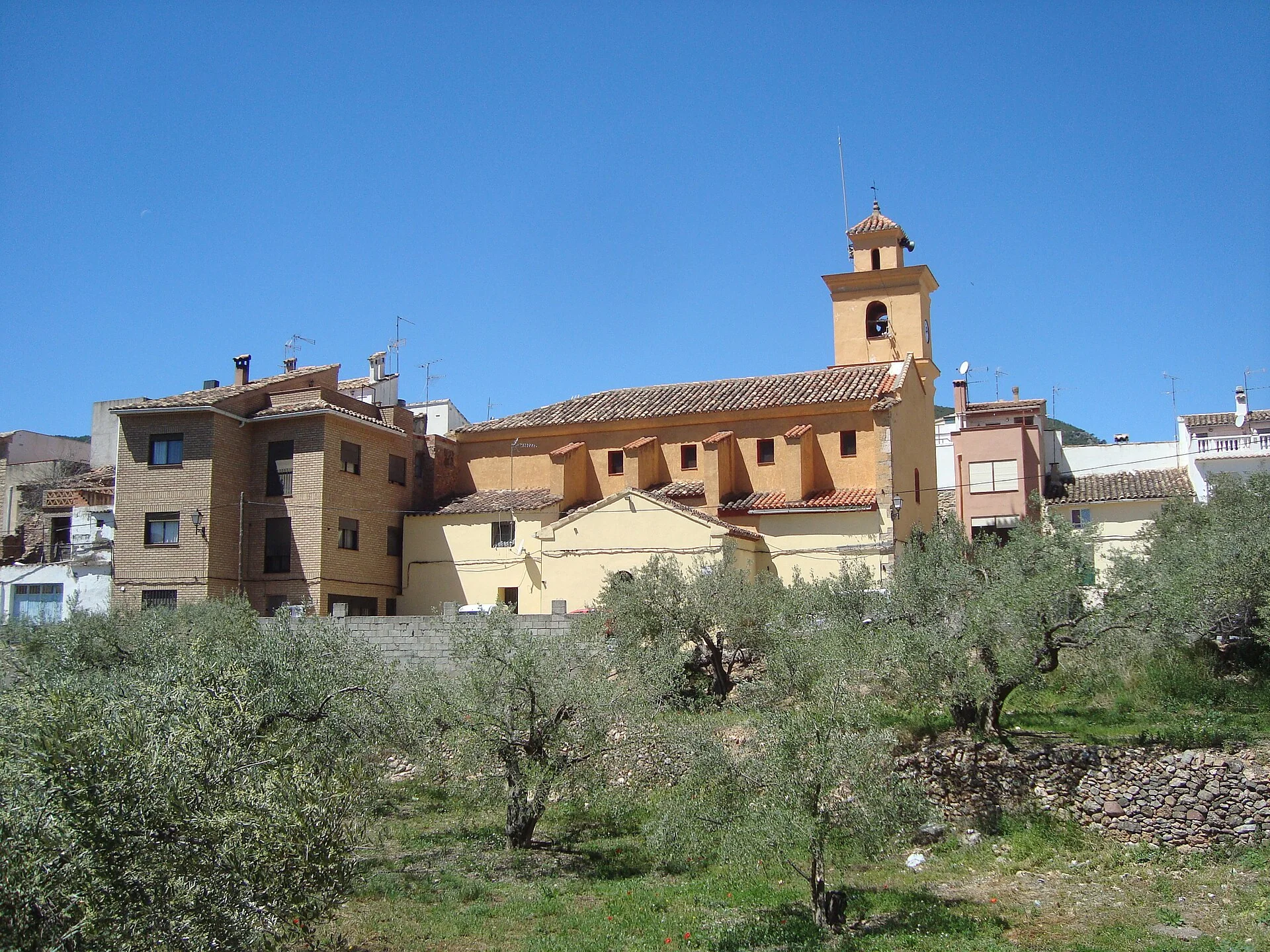
Torrechiva occupies a slope close to the Mijares and retains narrow streets associated with its Islamic origins. The tower that protected the settlement, San Roque church and river pools support a visit with specific local character. Archaeological sites and a cave add interest but require caution. This guide separates the urban walk from outdoor activities: seeing the village does not require entering caves or swimming.
The tower inside the village
The regional tourism portal dates Torrechiva Tower to the thirteenth century. Castellón Tourism explains that it defended passage through the Toga narrows, upstream on the right bank of the Mijares. It has a circular plan and rough construction using river stones of different sizes held with mortar. Its continued use is equally important: it is partly embedded in the façade of a house and serves as a private home.
This changes how it should be visited. Observe it from public space without entering, knocking at the door or photographing the interior. It is neither an open viewpoint nor a museum. The tower helps explain how the small defensive settlement developed, but residents’ privacy takes priority over tourism.
Islamic-origin streets and San Roque
The provincial profile gives Torrechiva an Arabic origin and describes a village that grew under the tower’s protection beside the river. Its narrow, winding streets retain that historic scale, although the buildings remain people’s homes. A slow walk reveals the relationship between slopes, farm buildings, façades and fields without treating the centre as a stage set.
The parish church of San Roque dates to the eighteenth century. Described as simple yet elegant, it stands out in the village silhouette. The main image on this page shows the church beyond an olive grove; it does not show the Mijares River. Interior access depends on worship and current opening, so the route should work even when only the exterior can be seen.
Archaeology in the landscape
Comunitat Valenciana Tourism identifies Abrigos del Mojonet, with medieval dry-stone walls, and Morrón Negro as protected archaeological areas. It also names Crucica del Barbero, whose origins are placed in the ninth century. These sites help interpret occupation beyond the present centre; they are not places to collect objects or rearrange stones.
Archaeology in open mountain country requires permitted paths and checks for restrictions. Dry-stone fabric is fragile: never walk along walls or attempt informal repairs. Publishing precise coordinates for sensitive remains is also inappropriate where public authorities have not prepared a visitor route.
Cueva de los Judíos is not a family stroll
The Provincial Council places Cueva de los Judíos in Partida El Higueral, within Torrechiva’s boundary but more readily approached from Fuentes de Ayódar. Its own profile gives a specific warning: the entrance is roughly ten to twelve metres across and can be hidden by scrub, creating a serious fall hazard.
This guide therefore neither recommends entry nor reproduces turn-by-turn directions. Caving calls for any required permission, specialised equipment and qualified people. General visitors can understand the cave’s existence while choosing marked alternatives. Keep children and animals well away from any open cavity.
Mijares pools and water safety
The regional portal describes a group of clear natural pools formed by the Mijares. Familiarity does not guarantee that bathing is permitted or safe every day. Check flow, water quality, weather alerts and signs. A storm upstream can increase current even if no rain has fallen at the bathing point.
Do not jump from rocks without knowing the depth, enter near weirs or leave rubbish. The riverscape is equally valuable from the bank when vegetation and property are respected. During high wildfire risk, never light fires or cook outside expressly authorised areas.
A responsible itinerary
- Begin at San Roque church and explore the historic streets.
- Locate the tower from the public road and note its integration into a home without intruding.
- Choose a marked walk towards the archaeological landscape, respecting every protected remain.
- Leave the Mijares for the final part and consider bathing only when official conditions are favourable.
- Exclude Cueva de los Judíos from a casual outing; it requires specialist planning.
The consulted sources do not support an exclusive list of Torrechiva dishes. Checking present businesses and opening hours is more useful than repeating a generic menu of mountain meat and stews. Calculate road distances separately before combining destinations.
Official sources and nearby guides
- Comunitat Valenciana Tourism: Torrechiva
- Castellón Tourism: municipal profile
- Castellón Provincial Council: Torrechiva Tower
- Castellón Provincial Council: Cueva de los Judíos
Independent onward guides cover Vallat, Torralba del Pinar and Villahermosa del Río, or return to the municipality finder.
The editing date records changes to the text, not a new check of opening hours, telephone numbers or accessibility. Specific verification dates, where recorded, appear beside the relevant information.