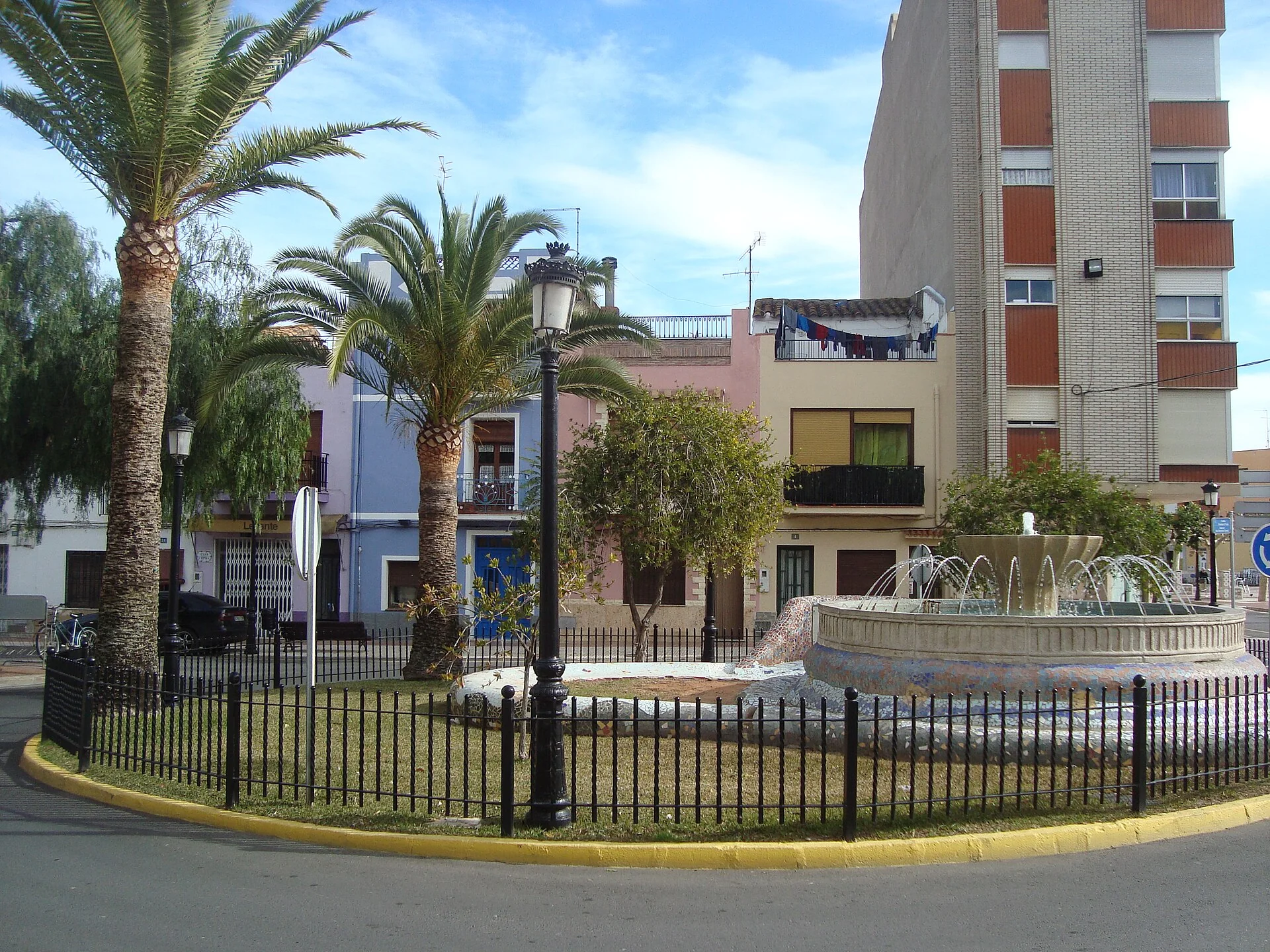
The photograph shows an urban square with a fountain, palms and homes in Oropesa del Mar; neither the castle nor the old town is visible. This correction prevents a residential scene being used as visual evidence of the ruins on the upper part of town.
The castle survives only in part
The Andalusi fortress had a polygonal plan with towers and a larger keep. Excavation has recovered rooms, original surfaces and sections of wall, but what stands today is a group of remains rather than a complete castle. Narrow, steep streets climb towards the hill and explain its defensive position.
The old town contains sites with different functions
Virgen de la Paciencia chapel retains eighteenth-century tiles from l’Alcora. Oropesa Museum interprets the castle, fortifications and everyday life, while the former jail, Pou del Ravalet and surviving wall sections stand elsewhere. None of these buildings appears in the main photograph.
Torre del Rey stands by the sea
Construction of the coastal tower began in 1413 on the order of Ferdinand of Antequera, and in 1534 it was reinforced with walls up to four metres thick. Philip II acquired it in 1568, giving rise to its present name. It is a separate fortification from the hilltop castle and stands near the lighthouse.
Check museum, tower and chapel opening as well as heat and mobility on the climb. This documentary review does not verify opening, surfaces, protection of the ruins or accessibility through an on-site inspection.
Related guides and local data
Sources consulted
- Turismo de Oropesa del Mar — ruta cultural y patrimonio
- Turisme Comunitat Valenciana — castillo y murallas
- Turisme Comunitat Valenciana — Torre del Rey
- Turismo de Oropesa del Mar — historia de la Torre del Rey
Documentary sources consulted on 30 August 2026. This is not an on-site inspection or a full check of opening hours, telephone numbers or accessibility. Any visiting conditions mentioned come from the linked sources.
The editing date records changes to the text, not a new check of opening hours, telephone numbers or accessibility. Specific verification dates, where recorded, appear beside the relevant information.