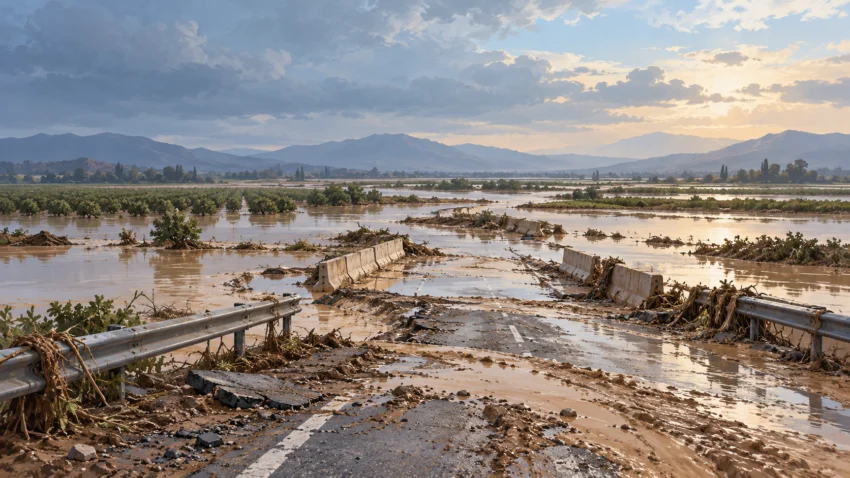
Storm Adam is moving away from the Valencia region after causing three deaths and forcing more than 2,000 people to evacuate, with Safor and Marina Alta the worst-hit areas. The torrential rain had eased by Tuesday, but the emergency did not end with the weather: homes, roads, public buildings and farms still have to be checked before everyone displaced can return.
A Civil Guard balance issued late on Monday recorded 2,141 evacuations and 496 rescues, 423 in Valencia province and 73 in Alicante. Spain’s Military Emergency Unit evacuated around 200 more people. The figures come from separate operations, remain provisional and may change as deployments are wound down.
Two deaths were reported in Oliva and a third in Sagunto. In Oliva, where floodwater cut off neighbourhoods and campsites, about 600 people received help at the multipurpose centre and roughly 400 spent the night there. The Civil Guard had 1,343 officers deployed across the region for rescues, security and work to restore access.
The water fell, but not everyone could return
The lifting of stay-at-home orders in more than 100 municipalities marked a shift from immediate protection to damage assessment. Improvement does not yet mean normality. Roads remained closed and damaged trees and public facilities were still being checked in Marina Alta. Els Poblets and El Verger kept affected schools closed on Tuesday, while Dénia and Xàbia resumed classes after inspecting buildings and access routes.
The rainfall totals explain the uneven recovery. Spain’s weather agency Aemet recorded 465.2 litres per square metre in Pego on Monday, 410 in Oliva and 371 in Miramar. Before the storm, the Interior Ministry had warned that local totals could reach 150 to 300 litres over the course of the event and that already saturated ground increased the danger of sudden rises in streams and ravines.
Roads, schools and farmland now face inspection
Municipal teams and emergency services are removing mud and debris, checking unstable trees and deciding which routes can reopen. Several rural roads and the municipal sports complex remained closed in Dénia because of damage and leaks. Low-lying parts of Pego and the Girona river mouth were also being assessed for damage to homes, businesses and agricultural holdings.
Whether people can return depends on individual buildings and access routes, not simply on the red weather warning having ended. Civil Protection continues to advise against crossing flooded sections on foot or by car: water may conceal undermined surfaces and other damage. Main roads should be used in preference to minor routes while inspections continue.
The next count must capture the damage
With the rain receding, the next verifiable milestone will be a consolidated assessment of casualties, residents still displaced, closed infrastructure and economic losses. It should also establish when the schools and public facilities still shut can reopen. Until then, the evacuation and rescue figures show the scale of the response, but not the full cost Adam has left in homes, farms and businesses.