A visit with context
Massalavés lies in the Ribera Alta on gently rising ground associated with the Riu Verd, also called the river of Els Ullals. Water provides a useful thread for a visit that goes beyond a generic attractions list: a historic church, everyday social history at the washhouse, and a working landscape of channels and springs. The compact centre is easy to walk, but natural sites require verified access and respect for farm tracks.
Heritage and history
Sant Miquel church is the main architectural reference. The provincial tourism authority dates its origin to the sixteenth century and says it was built over a former mosque. That detail links the building to the settlement’s transformation after the Christian conquest. Its exterior can be appreciated from public space, while entry depends on worship and current arrangements; an unscheduled interior visit should never be promised.
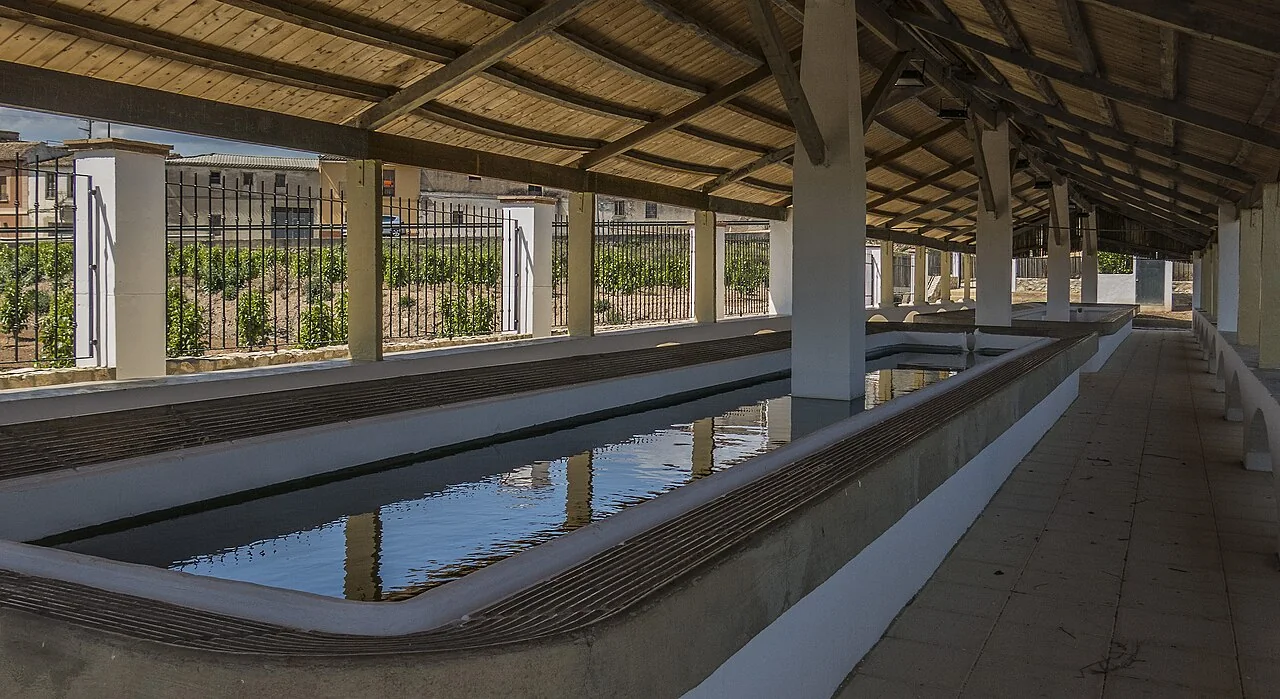
The covered municipal washhouse tells a different story: water as domestic infrastructure and a place of neighbourly contact. Its long line of basins and open relationship with the fields make it a particularly informative image of Massalavés. Visitors should treat it as cared-for local heritage rather than a stage set, keeping the structure clean and avoiding behaviour that could hinder its preservation.
Landscape and route
Els Ullals are associated with the source of the river dels Ulls, identified by the provincial guide as a natural place within the municipality. The springs and Riu Verd are a sensitive water system, not a guaranteed swimming site. Ask the council about the current route, ground conditions and any restrictions before setting out, and never take shortcuts through cultivated plots or irrigation margins.
Planning the visit
The municipal archive supplies the historical framework: it records the settlement’s Andalusi origin, its donation to Pedro del Milá in 1247, the former barony and the grant of town status in 1537. It also notes the demographic rupture caused by the expulsion of the Moriscos. A short route can link the church, central streets and washhouse, keeping the river landscape for a separate, unhurried stage.
Food and nearby connections
The official tourism account names arròs amb fesols i naps, soupy rice and paella amb broses made with wild plants. Inclusion in a guide does not mean every restaurant serves them daily, so ask or book. Other Ribera towns can extend the trip, but the Riu Verd should not be confused with the Júcar and attractions outside the municipal boundary must not be assigned to Massalavés.
Responsible planning
This guide gives priority to municipal, provincial and regional-government sources. Its links let readers verify the original evidence and identify later changes. Use a current map for the journey and check transport on the day of travel: services to small municipalities can be infrequent, while an old timetable is not proof that a bus or facility still operates.
Distances should be adjusted for mobility, age and temperature. Sloping streets, uneven surfaces and buildings without continuous access can change a route substantially. Anyone requiring step-free access should ask the council or venue a specific question, because describing two places as close does not mean there are no steps. Respect for homes, crops, worship, local events and signs is part of a visit that benefits the community.
Related guides and data
Official sources and checks
The editing date records changes to the text, not a new check of opening hours, telephone numbers or accessibility. Specific verification dates, where recorded, appear beside the relevant information.