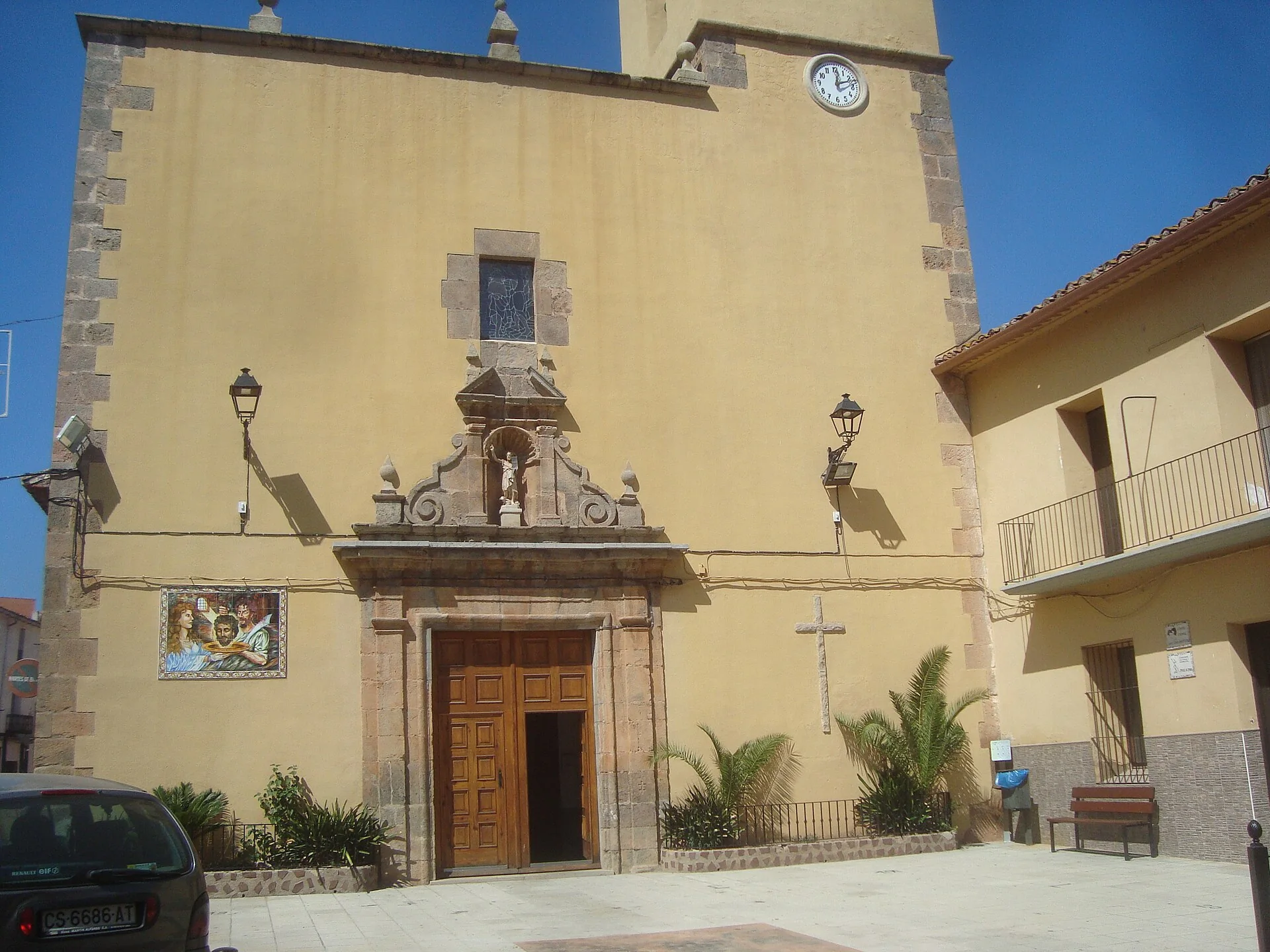
The photograph shows the façade of San Juan Bautista Church in Tales. Its stone doorway, niche, clock, ceramic panel and part of the square can be seen. The castle remains do not appear.
The church retains part of its 17th-century phase
The heritage record states that the church was built in the 17th century, although only the façade and Virgen del Carmen chapel remain from that phase; the rest dates from the 19th century. It replaced an earlier church higher in the village that was harder to reach.
The castle combines three building phases
The protected remains occupy a steep hill above the village. The study distinguishes a possibly Islamic core, a medieval extension with square towers and 19th-century Carlist War alterations including semicircular towers and a cistern. This is a separate visit from the photographed square.
The musical tradition has a specific memorial
A stone monolith dedicated to Tales’s dulzaina players was installed in Plaça dels Dolçainers in 1976. It gives the town’s dolçaina and tabal tradition a physical reference without reducing a living cultural practice to a generic phrase.
This documentary edit distinguishes the church, castle and musical memorial. It does not verify worship, interior, chapels, clock, ruins, towers, cistern, music, events, condition, hours, parking or accessibility on site.
Related guides and local data
Sources consulted
- Turismo de Castellón — iglesia de San Juan Bautista
- Turismo de Castellón — castillo, Torre Cabrera y Torre de la Muerte
- Turismo de Castellón — monumento a los dulzaineros
Documentary sources consulted on 2 September 2026. This is not an on-site inspection or a full check of opening hours, telephone numbers or accessibility. Any visiting conditions mentioned come from the linked sources.
The editing date records changes to the text, not a new check of opening hours, telephone numbers or accessibility. Specific verification dates, where recorded, appear beside the relevant information.