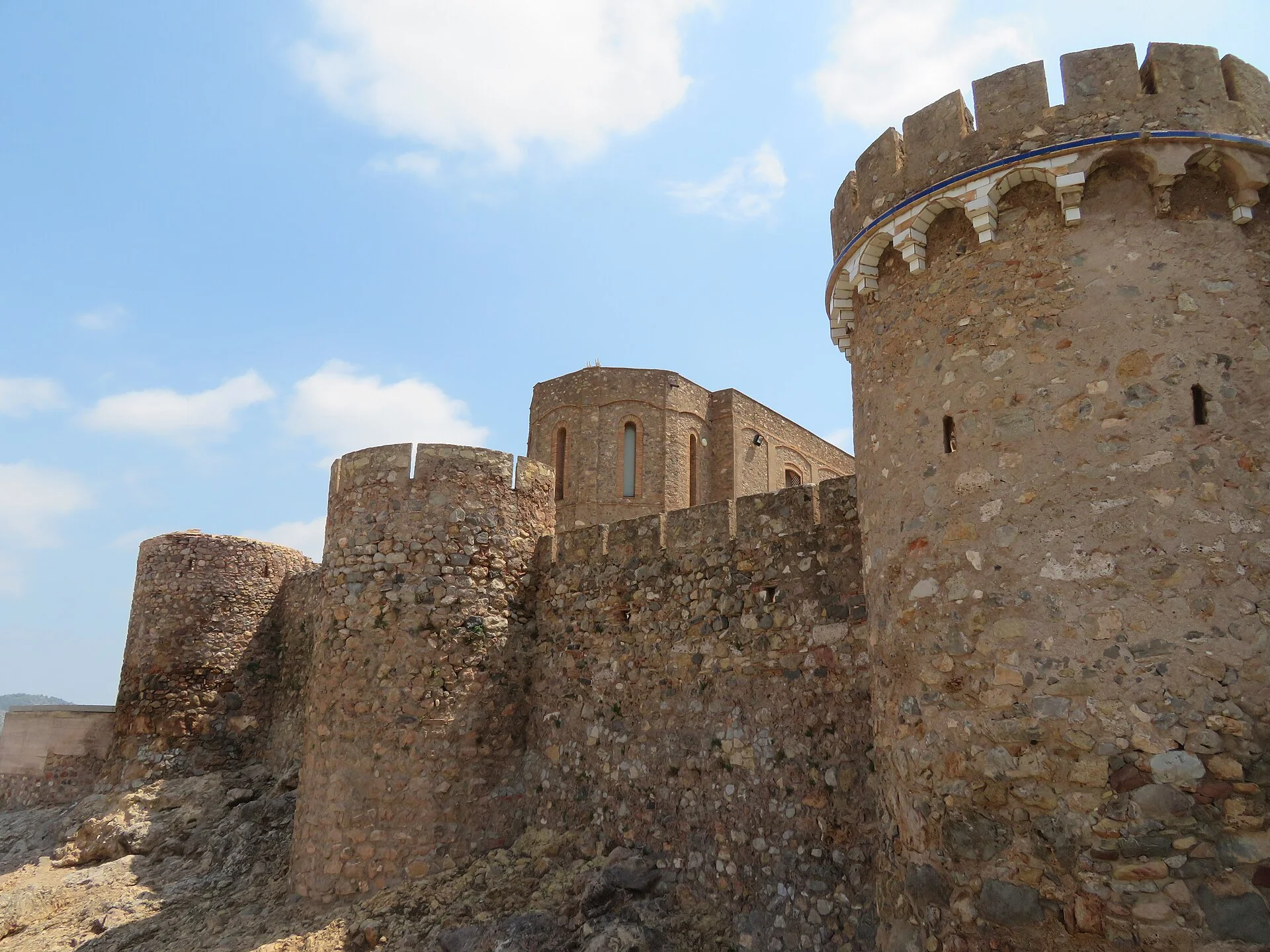
The photograph shows walls and towers of Onda castle with a building in the upper enclosure. The name “Castle of the 300 Towers” does not mean that three hundred structures survive: it comes from a medieval metaphor intended to convey the fortress’s scale.
The castle began as a fortified medina
The Andalusi fortress developed from the tenth century, with a walled medina around its citadel. Remains of the taifa palace can be recognised around a courtyard on the upper ground, while the history museum holds archaeological material including twelfth-century plasterwork recovered from an Andalusi house.
The old town continues below the fortress
Plaça de l’Almudí, streets of the former Muslim and Jewish quarters, devotional ceramic panels and Porta de Sant Pere belong to the urban route rather than the castle itself. The slopes and visual connection between walls and streets explain how the defences controlled an approach towards the Serra d’Espadà.
The tile museum explains the industrial town
Manolo Safont Tile Museum on Carrer de París holds more than 80,000 objects. Its collections cover architectural ceramics, machinery, documents and production from historic periods to the present, with particular strength in the nineteenth and twentieth centuries. It is separate from the castle’s archaeological museum.
Check opening, guided visits, heat and mobility conditions before climbing; the tile museum has its own schedule. This documentary edit does not verify accessibility, surfaces, interiors or the availability of every gallery on site.
Related guides and local data
Sources consulted
- Turisme Comunitat Valenciana — Onda, castillo y centro histórico
- Turisme Comunitat Valenciana — estructura e historia del castillo
- Turisme Comunitat Valenciana — Museu del Taulell Manolo Safont
- Turisme Comunitat Valenciana — palacio taifal y museo arqueológico
Documentary sources consulted on 30 August 2026. This is not an on-site inspection or a full check of opening hours, telephone numbers or accessibility. Any visiting conditions mentioned come from the linked sources.
The editing date records changes to the text, not a new check of opening hours, telephone numbers or accessibility. Specific verification dates, where recorded, appear beside the relevant information.