Alicante City Council has been ordered to pay €6,000 to each of two residents after failing to protect them adequately from nightclub noise at night. The ruling also requires the council to measure the sound reaching their home while the venue is operating at its busiest. The judgment remains open to appeal.
Dated 25 August, the ruling was made public by Spain’s judiciary on 10 September. The judge at seat number 1 of the Administrative Litigation Section of Alicante’s Court of Instance found that the council’s response had violated the residents’ rights to privacy, family life and the protection of their home. UPIKUM Club occupies the basement of a building on Calle Coloma, beside the Explanada promenade.
The €12,000 award is only part of the outcome. The full judgment sets out specific steps to establish whether the residents’ home is adequately protected from noise. The council must open or reopen its enforcement file and complete an acoustic inspection within one month of the judgment becoming final. Publication of the news does not start that clock.
Night-time measurements and a written decision
The inspection must include measurements inside the home, checks at the venue and an examination of the sound limiter’s settings and records. As far as technically possible, the procedure must distinguish noise from the nightclub, other businesses and the background. The council must offer the residents at least three reasonable dates through a verifiable form of communication.
It will then have ten days to issue and notify a reasoned decision. If the limits are exceeded, it must take corrective action and maintain the measures until a further measurement at the home confirms compliance. Depending on what is necessary and proportionate, the judge allows for changes to the limiter or opening hours, insulation work or temporary suspension. The ruling does not order permanent closure.
The complaints date back to 2022. The council argued that it had acted and that the claimants had not always made access possible. The company named as a co-defendant challenged both the source of the noise and the acoustic report. The judge acknowledged police attempts to arrange measurements and difficulties gaining entry, but found the overall response inadequate.
Several calls were made at around 9pm, well before the disturbance described between 3am and 6am. After unsuccessful contacts, the judgment says, appointments were not consistently arranged in writing, and the file contained no record of a council inspection inside the home at a representative time.
Twelve assessments in the bedrooms
The residents commissioned tests in two bedrooms of one home in November and December 2024. All twelve assessments returned corrected values between 40.4 and 50.9 decibels, above the indoor night-time limit of 25 used in that part of the report. The judge considered the repeated findings alongside other evidence and identified the nightclub as the main source of the disturbance.
The claim succeeded only in part. The court awarded compensation for non-financial harm but found insufficient evidence of the serious and immediate health danger needed to establish a separate violation of physical and moral integrity. It also rejected compensation based on the properties’ theoretical rental value and automatic awards for future harm.
Radio Alicante’s report notes that an appeal can be brought before the Valencian High Court. The inspection deadline will begin once the judgment becomes final. The council’s subsequent decision and follow-up measurements will show what action is taken and whether noise reaching the home stays within the limits.
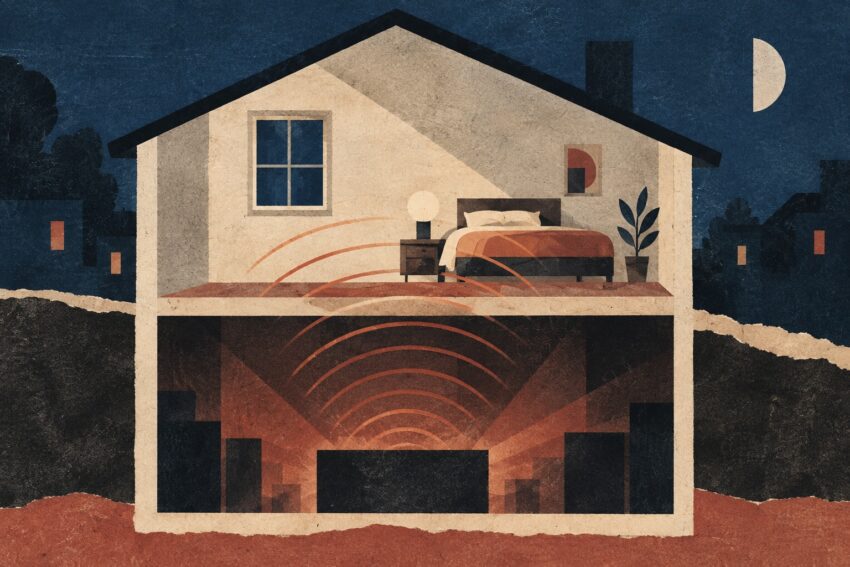
Original AI-generated editorial illustration about noise at home; it does not depict the building or nightclub in this case.