n
Sourced guide
Setting and character
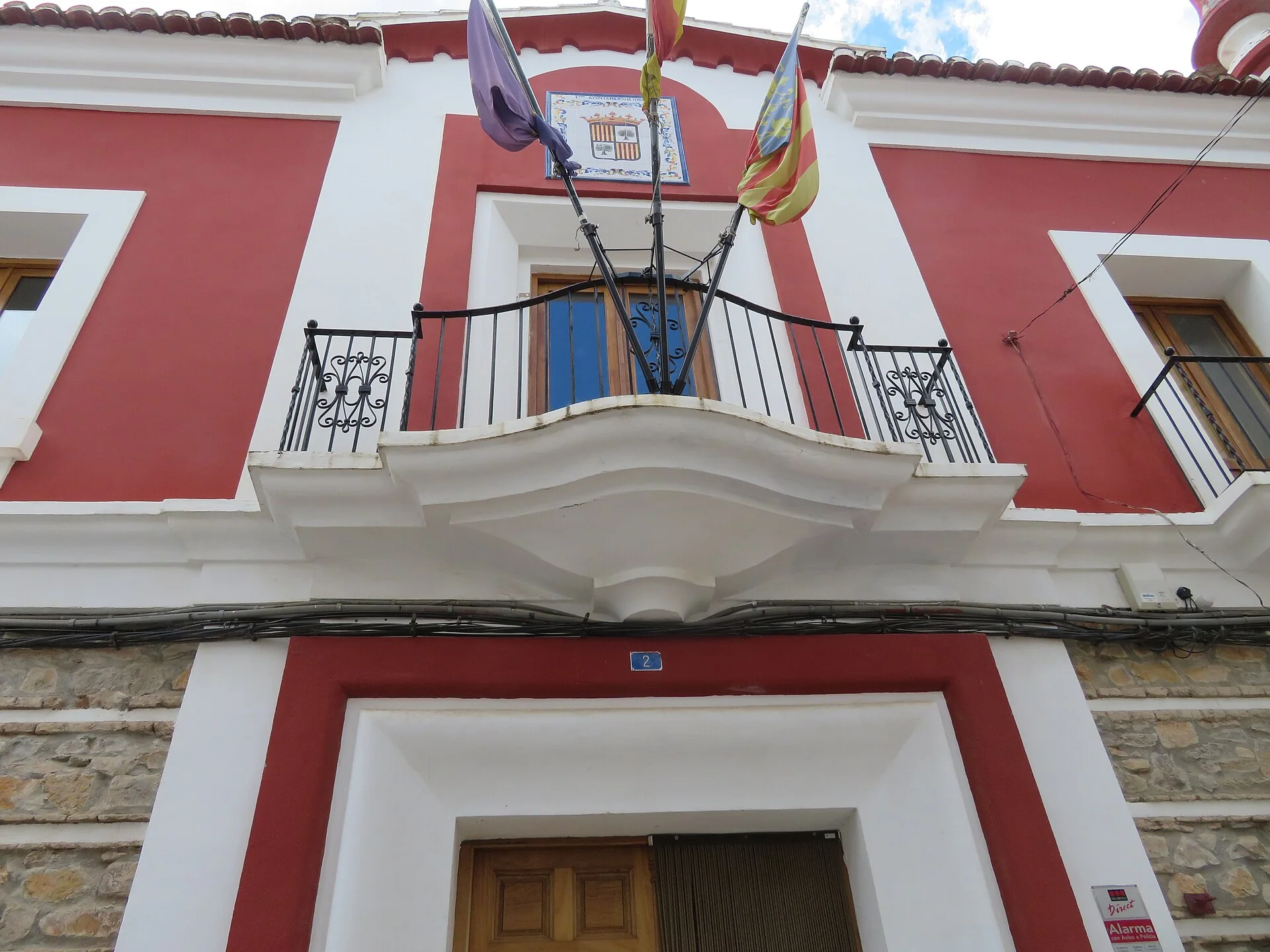
Teresa in Alto Palancia must not be confused with Teresa de Cofrentes. The featured photograph shows the red-and-white Town Hall façade with ceramic arms and flags; it is not the River Palancia. Correct identification places the actual start of the walk in the square shared with Our Lady of Hope church, from which narrow streets of whitewashed houses extend through the centre.
Documented heritage
Castellón tourism associates the church with fifteenth- and seventeenth-century phases. The upper village contains the Calvary, an old washhouse and the traditionally named “Moorish oven”. These are distinct elements, and the oven’s popular name does not by itself prove an Islamic date. A responsible visit appreciates the exteriors and asks the council or parish before assuming any interior entry.
Landscape and territory
Water accompanies the town route through Santo, Raval, Fuente Nueva, Replaceta and Fuente Azul fountains. The Lugar irrigation channel is visible along part of Calle Ermita. The two-spout Calvary fountain dates to 1921; the church-square fountain commemorates the arrival of water from the Dehesa channel through an initiative led by parish priest Manuel Barrachina. These are historic infrastructure, not generic street decoration.
How to organise the visit
Fuente del Río and Batán lie beside the Palancia, with the latter institutionally described as a recreation area with river beaches. Bathing depends on flow, water quality, works and alerts; lifeguards and safe conditions must never be assumed. Fuente Azul can begin a walk towards the river or Sonsida. Suitable shoes, drinking water and storm awareness remain necessary on a short outing.
Food, boundaries and context
A half-day route joins the square, church and town fountains, climbs to the washhouse and Calvary, and only then adds the riverbank. The provincial source mentions small-scale food production involving pâtés and anchovies alongside farming, but visitors should ask what is genuinely local and available. Bejís, Viver or Jérica can extend the trip without transferring their springs and towers to Teresa.
Responsible planning
When planning a visit to Teresa, check the linked council or tourism page, the weather forecast and any notices about fire risk, works or festivities. Churches are not museums with permanent opening hours, while farms, terraces and houses mentioned may be private. Carry water and suitable footwear, avoid blocking narrow streets and never enter riverbeds, ruins or closed structures. Timing depends on gradient, mobility and stops, so keep the town walk separate from a mountain route or an outlying drive.
How to use this information
For Teresa specifically, the linked sources support the names, dates and features used to explain the municipality, but they do not replace a real-time check. A heritage record may remain historically accurate even when access, signs or the building’s use changes. This guide therefore separates established facts from variable recommendations and does not promise admission, tours, toilets or food service. Where institutions provide different dates, they are treated as phases or the discrepancy is stated instead of being hidden.
When exploring Teresa, accessibility differs greatly between a square, hermitage, viewpoint and trail. Anyone needing step-free routes, adapted public transport or accessible toilets should confirm them with the council before travelling. Bus frequency, taxis and charging points can also vary in small villages. Save useful contact details, download a map before leaving the settlement and allow enough daylight to return. No scenic reference is permission to cross private property or continue in poor weather.
Frequently asked questions
How much time should I allow?
For Teresa: Allow roughly one to four hours for the settlement and plan the described routes or outlying sites separately.
Are interiors and natural sites always accessible?
For Teresa: No. Confirm opening times, permission, trail condition and restrictions through official sources before travelling.
How is this different from a generic template?
For Teresa: Every place, date, image and municipal boundary has been checked for this municipality, with the supporting sources linked below.
Related guides and local data
Official sources and verification
n
The editing date records changes to the text, not a new check of opening hours, telephone numbers or accessibility. Specific verification dates, where recorded, appear beside the relevant information.