Ribesalbes occupies a hillside beside the Mijares in La Plana Baixa. Ceramics and palaeontology provide its specific identity: Casa de la Baronía combines local manufacture with fossils from an ancient Miocene lake; San Cristóbal and Calvary explain the town; and the river and Sitjar reservoir require careful distinctions between walks, trails and water activities.
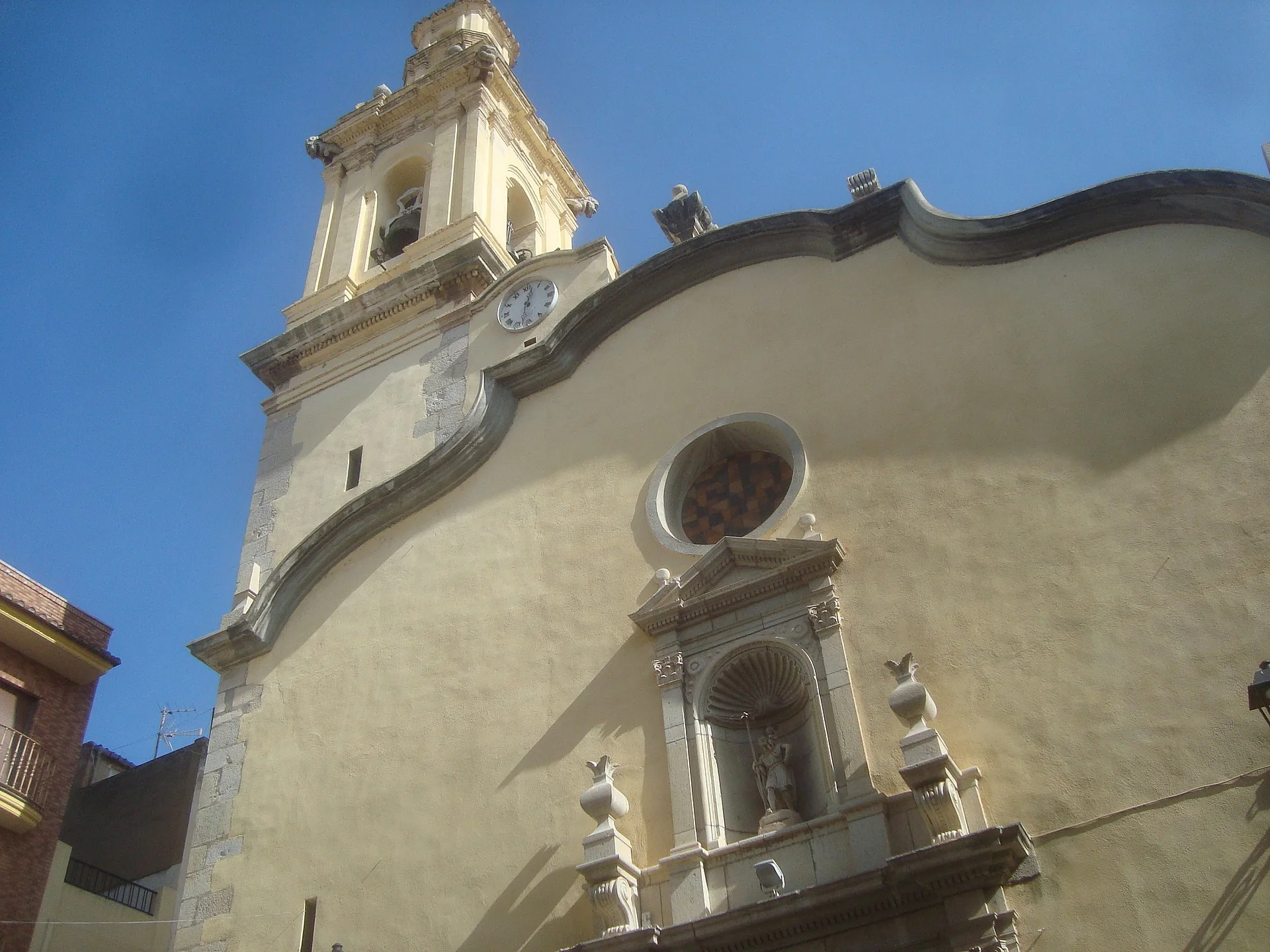
The photograph shows San Cristóbal
The main image is the façade and bell tower of San Cristóbal Mártir parish church, not the museum. Castellón Tourism dates this Neoclassical building to the eighteenth century and highlights its interior chapels and frescoes on the vault. The curved façade, oculus, clock, niche entrance and tower can be read from outside.
Interior access depends on worship. Chapels and frescoes cannot be promised as open or illuminated at every visit. Observe the exterior without disturbing services or nearby homes.
Ceramics before and after 1781
Castellón Tourism links Ribesalbes to a ceramic tradition with Arabic roots, strengthened in the eighteenth century by the Royal Factory of the Count of Aranda in L’Alcora. The district guide records a local milestone: José Ferrer founded Ribesalbes’s first earthenware factory in 1781. Craft workshops and industrial production later developed together.
This history supports discussion of skills, forms and employment but does not make working factories public museums. Confirm tours, direct sales or workshops with each business.
Casa de la Baronía: pottery and fossils
The Baronía Museum opened on 29 May 1999 in a former manor house on Calle Escuelas. It combines Ribesalbes ceramics, palaeontology and local history. Displays change as research progresses and new material becomes available.
La Rinconada, also called La Rinconà, is a Lower Miocene lake deposit with fossils between 21.5 and 23 million years old. The provincial record identifies it as the only known Valencian Konservat-Lagerstätte, a rare type of site characterised by exceptional preservation.
The museum contains fossil leaves, insects and amphibians from Ribesalbes, vertebrates and invertebrates from around the world, replicas of dinosaur skulls and a prehistory section. Newly described fossil insect species from La Rinconada were deposited as holotypes at Madrid’s National Museum of Natural Sciences. The field site is not a place to collect specimens.
The provincial page publishes visiting hours, but these can change. Confirm days, booking and accessibility with the council. A page stating free entry does not guarantee opening on a holiday.
Calvary, aqueduct and old streets
The older streets lead from San Cristóbal to Casa de la Baronía. The municipal profile also names a nineteenth-century aqueduct and Calvary hermitage. Calvary’s approach is lined with stations or niches bearing hand-painted ceramics, visibly connecting devotion with the town’s craft.
The ascent offers a view, but surface, steps, heat and shade need consideration. Do not touch the ceramic niches or walk along the aqueduct structure.
Two different routes involving Fanzara and the Mijares
The regional portal describes a river route towards Fanzara with pools, tunnels and sections where feet may get wet. This means flow, water temperature, upstream storms and footing must be checked. Warm weather alone does not make the crossing safe.
Separately, Castellón Tourism publishes an 11.87-kilometre circuit with 235 metres of ascent linking Fanzara, Fuente El Cantón, Sitjar reservoir and Ribesalbes. It should not automatically be treated as the same river route. Use the correct official track, carry water and plan the return for either outing.
Sitjar regulates the Mijares here. Changing water levels, unstable banks, outlets and restricted infrastructure require compliance with signs. The existence of commercial kayak or paddleboard activities does not authorise independent launching at any point.
Food and a practical order
The district guide documents olla de penques, vegetable flatbread and tords amb ceba. These are specific references, not guaranteed daily dishes. Check season, business and booking, particularly where game traditions are involved.
- Begin at San Cristóbal and the older streets.
- Give the Baronía Museum time after confirming opening.
- Choose the aqueduct or Calvary to complete the urban section.
- Reserve either the river route or the 11.87-kilometre circuit for a separate, properly prepared outing.
Official sources and nearby guides
- Comunitat Valenciana Tourism: Ribesalbes
- Castellón Tourism: municipal profile
- Provincial Council: Baronía Museum
- Provincial Council: La Rinconada fossil site
- Provincial Council: Fanzara–Sitjar–Ribesalbes circuit
For a separate onward trip, see Onda, Fanzara or L’Alcora, or return to the municipality finder.
The editing date records changes to the text, not a new check of opening hours, telephone numbers or accessibility. Specific verification dates, where recorded, appear beside the relevant information.
1 thought on “Ribesalbes guide: Baronía Museum, San Cristóbal and ceramics”