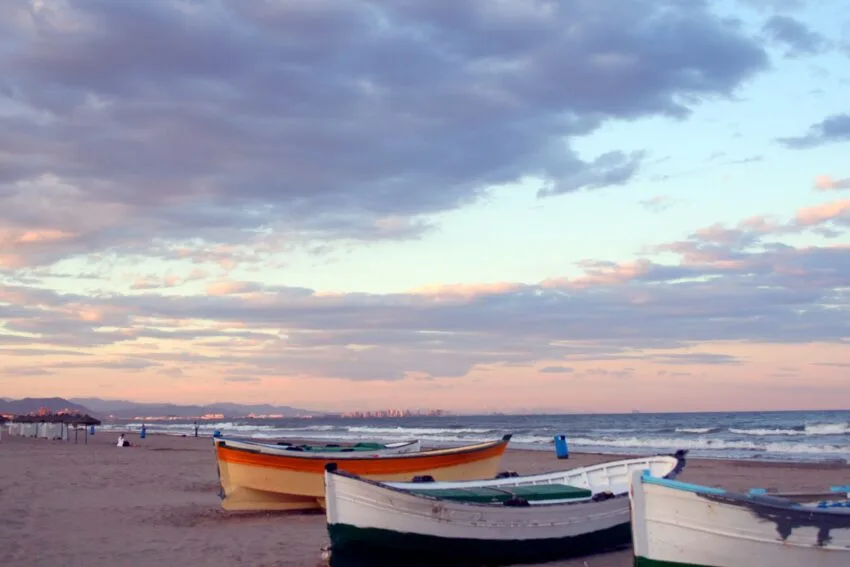
The Casa dels Bous, an emblematic building of Cabanyal-Canyamelar, has become the Museu del Mar de València. This space, restored with strict historical rigor, houses the memory of the Maritime Settlements. Its transformation is the result of a struggle of more than sixty years to preserve the legacy of the fishermen. Mayor María José Català presided over the inauguration, an event that meant a lot to the local community. The place, which for centuries housed bous, fulfilled essential functions in traditional fishing. These animals, of great size and strength, were key to dragging boats and nets from the shore. Their weight could reach 700 kilos, and their traction capacity reached up to four tons. Their physical design allowed them to move without sinking in the sand, a crucial advantage on the Valencian coast.
The museum is organized into three distinct areas: ground floor, first floor and the Tenyidors cottages. Each space is designed to show different aspects of the fishing trade. The ground floor exhibits tools, photographs and objects that reflect daily work. The first floor and the cottages offer a deeper look into the daily life of the fishermen. All the content is based on oral testimonies, family documents and materials recovered by social entities. Rubén Pacheco, director of the project, highlighted the importance of saving this memory before it was lost. Interviews with former workers were key to reconstructing the living history of the place.
The Casa dels Bous, which survived the disappearance of many others, is now a symbol of cultural resistance. Its restoration was carried out by Estudio Método de la Restauración, respecting all the original elements. The information was digitized by Cultural Media Design. The museum design was the work of Matra, while the logo was created by Ricardo Cañizares and Suso Pérez. This museum not only recovers the past, but elevates it to the category of heritage. It is the first museum that Valencia opens in two decades, a fact with deep symbolism. It is not traditional art, but a way of life that disappeared with the mechanization of fishing.
Bous fishing was not just an economic activity, but a culture with its own customs, knowledge and wisdom. This craft distinguished those who lived by the sea from those who did so inland. The figure of Joaquim Sorolla and Vicent Blasco Ibáñez serves as a historical reference to understand this reality. Today, thanks to the community initiative, that history is preserved. The image of a fisherman hoisting a net, as his father and grandfather did, is still alive in the stories. For people like Maria Amparo, the place is more than a museum: it is their home. What seemed impossible fifty years ago has now materialized in a space that honors those who fed thousands of families.