A visit with context
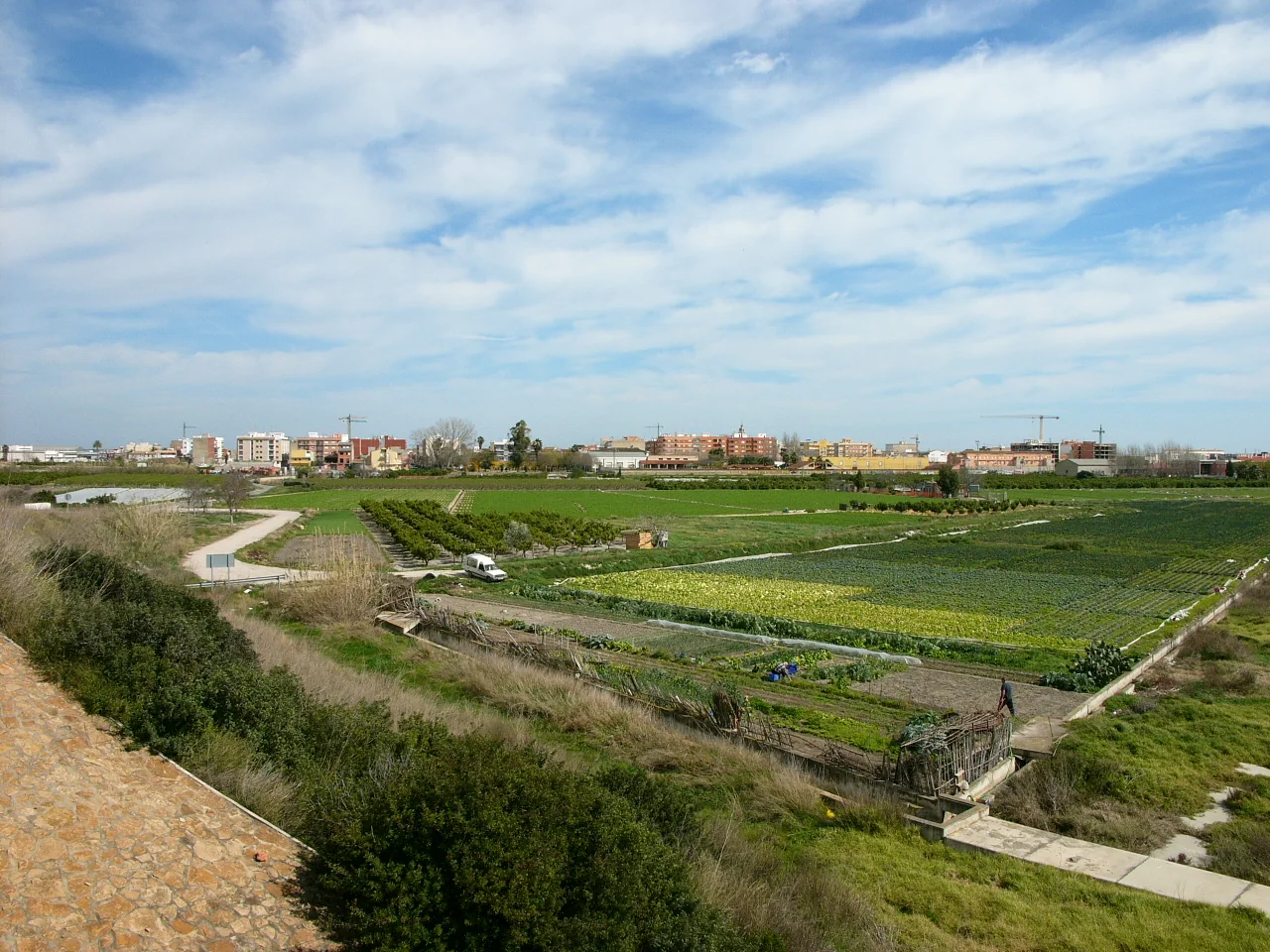
Sollana is best understood through two connected landscapes: the town and market gardens, then the marshland associated with l’Albufera to the north. The view from the Alzira road captures the transition, with cultivated plots in front of the skyline. A useful guide must distinguish what belongs to the municipality from the wider wetland; not every jetty or rice field around the lagoon is in Sollana.
Heritage and history
In the town centre, the provincial guide highlights Immaculada church and the Raval church, together with the market and municipal washhouse. These nearby stops make a walkable route through everyday architecture and religious heritage. The churches remain active places of worship rather than permanently staffed attractions. Current opening, services and building work should be checked before any interior access is promised.
Portet, also associated with Motor de Bala, lies close to the lagoon and historically brought fishermen, farmers and other marsh users together. Nearby, the Tancat de Mília tower provides an elevated reading of a constructed wetland, rice fields and l’Albufera on the official park map. Access conditions may change: follow signs, stay out of cultivated plots and keep noise low around wildlife.
Landscape and route
Forner or Assarb, Font del Barret, Rajolar and Tramusser ullals are freshwater springs within the wetland mosaic. The provincial authority notes their importance for threatened fish including samaruc and fartet. They are not swimming pools or ordinary urban parks and should only be approached on permitted routes. Rice plots look dry, flooded or intensely green at different stages of a normal agricultural cycle.
Planning the visit
A full day can begin at the churches and centre, continue to Portet and keep birdwatching for quieter hours. Cyclists should consult current official mapping, carry water and lights, and expect agricultural vehicles on shared sections. Documented local foods include pot or soupy rice, cod croquettes, mostatxuts, pumpkin sweets and marsh fish preparations, but travellers should ask what is actually available that day.
Responsible planning
This guide gives priority to municipal, provincial and regional-government sources. Its links let readers verify the original evidence and identify later changes. Use a current map for the journey and check transport on the day of travel: services to small municipalities can be infrequent, while an old timetable is not proof that a bus or facility still operates.
Distances should be adjusted for mobility, age and temperature. Sloping streets, uneven surfaces and buildings without continuous access can change a route substantially. Anyone requiring step-free access should ask the council or venue a specific question, because describing two places as close does not mean there are no steps. Respect for homes, crops, worship, local events and signs is part of a visit that benefits the community.
Related guides and data
Official sources and checks
The editing date records changes to the text, not a new check of opening hours, telephone numbers or accessibility. Specific verification dates, where recorded, appear beside the relevant information.