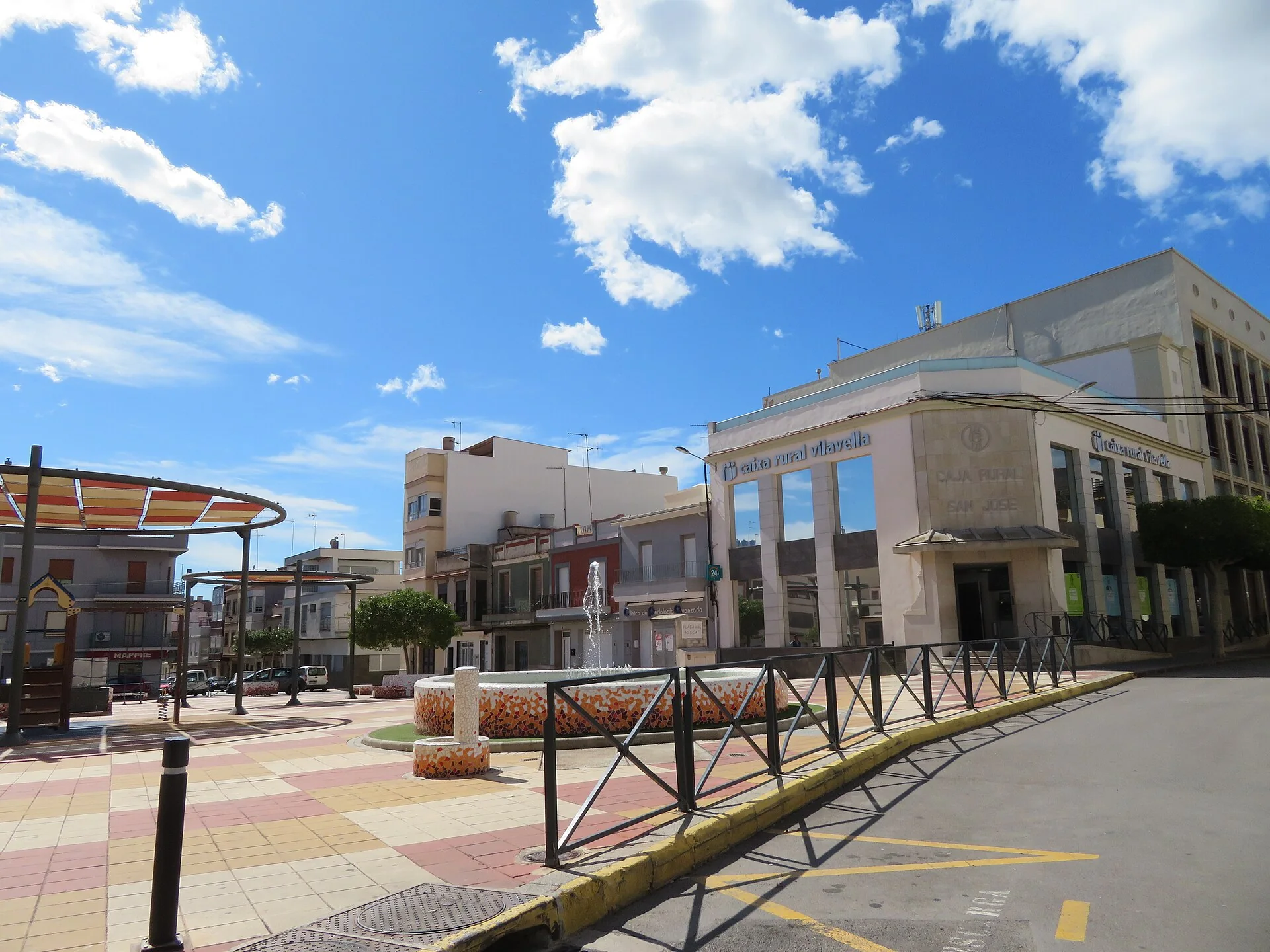
The photograph shows a town square with a fountain and the Caixa Rural Vilavella building; neither the castle remains nor the Calvary is visible. This everyday space locates the town before a heritage route connecting former thermal establishments, archaeology, mining and the fortified hillside.
The thermal itinerary survives in buildings and traces
The council route begins at Plaça de la Vila and recalls the twelve spas the town once had. Panels and facades trace former bathhouses, while the official itinerary identifies the Monlleó establishment as the thermal centre still operating when the route was documented. A spa history does not make every urban fountain a thermal spring.
Castle, Calvary and chapel occupy the hillside
The route continues towards the castle remains, Sant Sebastià Chapel and the Calvary. These are separate stops from the photographed square and involve an outdoor gradient and surfaces. The same route refers to the Roman sanctuary of Apollo, trenches and stone-working features: elements from different periods that should not be collapsed into one description.
Maria Fernanda mine explains another local industry
Maria Fernanda Mining Space is an open-air museum at the former iron workings. Its surviving installations add an industrial reading to the municipality’s thermal and defensive history. Being outside a conventional gallery does not remove the need to check route condition, signs and any temporary limitations.
This documentary review corrects the image identification and separates the areas of a visit. It does not verify spa opening, access to the castle or mine, gradients, shade, paving, works, safety, accessibility, or the water’s current temperature and properties on site.
Related guides and local data
Sources consulted
- Ayuntamiento de La Vilavella — ruta patrimonial
- Ayuntamiento de La Vilavella — itinerario termal
- Ayuntamiento de La Vilavella — guía oficial de rutas
Documentary sources consulted on 31 August 2026. This is not an on-site inspection or a full check of opening hours, telephone numbers or accessibility. Any visiting conditions mentioned come from the linked sources.
The editing date records changes to the text, not a new check of opening hours, telephone numbers or accessibility. Specific verification dates, where recorded, appear beside the relevant information.