Want to advertise?

Promote your business or project for just €2 per month.

Learn more →
Skip to content

València Informada

Practical guides, open data and official sources to better understand Valencia and the Valencian Community.

Menu
  • Home
  • Guides
    • Services
    • Practical guides
  • Bulletins
    • Archive
    • Bluesky Valencia
    • Official updates
    • Citizen bulletins
  • Health
    • Health-centre directory
  • Mobility
  • Data
    • Open data
    • Municipalities
    • Tourist accommodation
    • DANA
  • Tourism
    • Tourism and culture
    • Municipality guide
  • About
  • Contact
  • ESCAEN
Menu
Tourism and culture

Polop guide: castle, 221 spouts and Gabriel Miró House

Explore Polop through its Islamic castle, old cemetery, 221-spout fountain, Gabriel Miró House Museum and the separate Ponoig landscape.

1 September 2024 3 min read Updated 28 Jul 2026
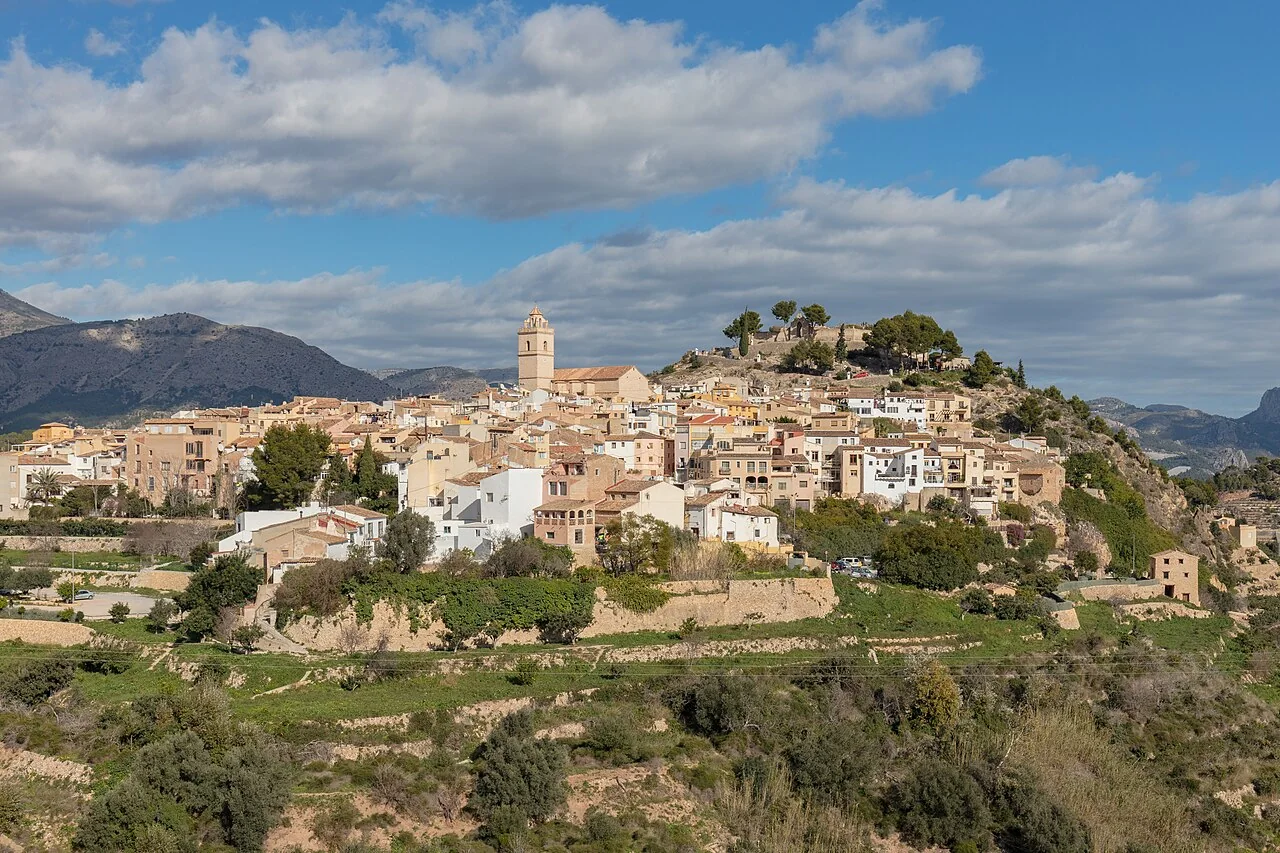
Casco histórico en Polop, Alicante

On this page

  1. Plaça dels Xorros and the 221 spouts
  2. Gabriel Miró House Museum
  3. Climb to the castle and old cemetery
  4. How to read the double enclosure
  5. A coherent town route
  6. Ponoig: a separate outing
  7. Food and nearby options
  8. Official sources and verification
  9. Tourist accommodation and checks before visiting

Historic centre in Polop, Alicante province
Diego Delso · CC BY-SA 4.0

Polop wraps around a fortified hill and is best explored from bottom to top. Plaça dels Xorros introduces its water heritage, steep streets lead to the castle and old cemetery, and the Gabriel Miró House Museum adds a literary perspective. Ponoig belongs to a different scale and should not be folded into this urban walk.

Plaça dels Xorros and the 221 spouts

The present fountain took shape in a 1947 remodelling with 221 water outlets. Its supply comes from the Terrer and Garrofer springs, while ceramic panels make the square more than a photograph stop. It is a useful place to understand water’s role in the town before beginning the climb.

Gabriel Miró House Museum

Beside the square, the museum occupies an architecturally significant villa and holds a collection connected with writer Gabriel Miró and his relationship with Polop. It also serves as the tourist office. Municipal information requires advance booking for visits; hours and contacts can change, so check the official listing before travelling.

Climb to the castle and old cemetery

The castle is an Islamic fortress built in the early twelfth century. Surviving features include stretches of a double defensive wall, a cistern, a square masonry tower and rectangular rooms. Material was reused in nearby construction, and the enclosure later became the old cemetery, creating the appearance Gabriel Miró called an “orchard of crosses”.

The approach rises from the town. Expect gradients and uneven ground, respect the site’s funerary character and do not imagine a complete furnished castle. Its value lies in the surviving structures, defensive position and view across Marina Baixa. Check for works or access restrictions before climbing.

How to read the double enclosure

The surviving walls do not all belong to one moment. The outer and inner circuits reflect successive defensive needs, while the cistern explains how the hilltop could store water. Rectangular rooms and the masonry tower are archaeological remains rather than reconstructed attractions. Keeping those distinctions in mind prevents the old cemetery, later paths and medieval fabric from being described as one unchanged castle.

Casco histórico en Polop, Alicante

A coherent town route

  1. Begin at Plaça dels Xorros and read the fountain’s ceramic panels.
  2. Enter the Gabriel Miró museum only after confirming access or booking.
  3. Climb through the traditional centre without using informal shortcuts.
  4. Explore the enclosure respectfully and return through the old streets.

Ponoig: a separate outing

Ponoig reaches 1,181 metres and has walking trails, rock walls and a via ferrata. The ferrata is a technical activity for people with suitable experience and equipment, not a spontaneous extension of the castle walk. Trails on Ponoig and in Gulabdar ravine also require a defined route, water, suitable weather and an honest fitness assessment.

Food and nearby options

Foods associated with Polop include pilotes de dacsa and olleta de blat; verify current menus. Relleu focuses on a reservoir and ravines, Sella on water heritage and Aitana, and Tàrbena on Majorcan heritage.

Official sources and verification

  • Polop Council — castle
  • Gabriel Miró House Museum and tourist office
  • Comunitat Valenciana Tourism — Polop

Tourist accommodation and checks before visiting

This information helps review accommodation, capacity and practical details before planning a visit. Availability, exact address and conditions for any accommodation should always be checked with official sources or with the establishment.

Hotels and regulated accommodation

These establishments appeared in the municipality’s historical tourism information. Before booking, confirm availability, conditions, category and contact details with the accommodation provider or the official tourism source.

LEON DORMIDO

  • Address: CALLE GABRIEL MIRÓ, 02, POLOP
  • Capacity: 63 places

Registered tourist homes

List of tourist homes included in the municipality’s historical information. Always check registration, availability, address and conditions before booking.

VT-500619A

  • Address: URBANIZACIÓN POLOP HILLS – AVENIDA BALCON DE PONOIG, 43, PISO D9, POLOP
  • Capacity: 6 places

VT-485608A

  • Address: URBANIZACIÓN POLIGONO 5 – PARTIDA ALBERCA, 2, PUERTA 27, POLOP
  • Capacity: 6 places

VT-485609A

  • Address: URBANIZACIÓN POLIGONO 5 – PARTIDA ALBERCA, 2, PUERTA 26, POLOP
  • Capacity: 6 places

VT-472143A

  • Address: URBANIZACIÓN LA ALBERCA – CALLE ALMERIA, 44, POLOP
  • Capacity: 4 places
Share on social media
x facebookwhatsapptelegram
Follow us on social media
x

València Informada editorial team. Published on 1/09/2024 and updated on 28/07/2026.

Informational content based on public sources. València Informada is not an official website and does not replace the competent public administration.

Main sections

  • Official updates
  • Practical guides
  • Open data
  • Mobility
  • Health
  • Tourism and culture

València Informada

Independent citizen portal with practical guides, open data, bulletins and official sources from Valencia and the Valencian Community.

Guides

Practical guidesArchiveBulletinsContact

Transparency

About usAbout the siteEditorial policySources usedCorrections

Legal

Legal noticePrivacyCookies
©2026 València Informada
Manage consent
To provide the best experiences, we use technologies such as cookies to store and/or access device information. Consent to these technologies will allow us to process data such as browsing behaviour or unique IDs on this site. Not consenting or withdrawing consent may negatively affect certain features and functions.
Functional Always active
Technical storage or access is strictly necessary to enable the use of a service explicitly requested by the user or to transmit a communication over an electronic communications network.
Preferences
Technical storage or access is necessary to store preferences that were not directly requested by the user.
Statistics
Technical storage or access is used exclusively for statistical purposes.
Marketing
Technical storage or access is necessary to create user profiles for advertising purposes or to track the user across different websites.
Manage options Manage services Manage vendors Read more about these purposes
View preferences