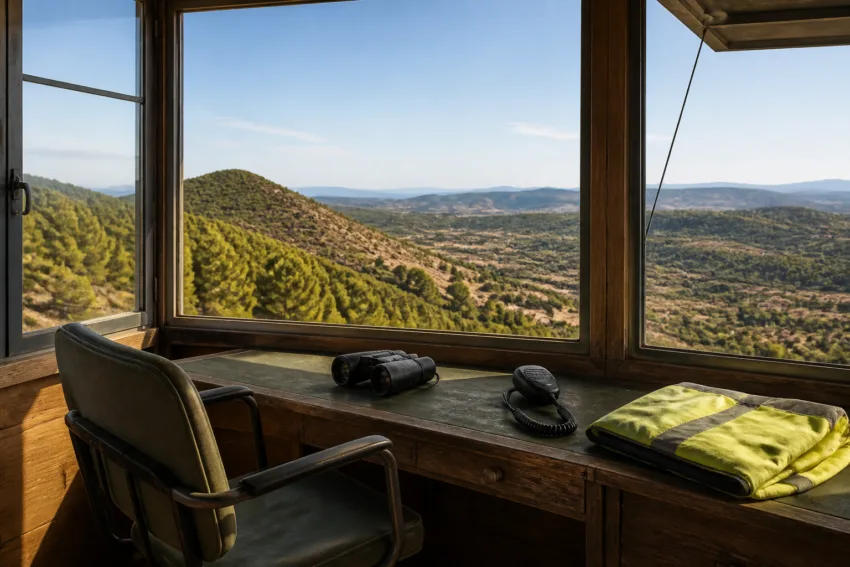
Staff who watch Valencian woodland for the first signs of fire have been called out on strike across the Valencian Community on Sunday 30 and Monday 31 August. The walkout covers Vaersa lookout operators working in observation posts and mobile patrols, but it will not shut the service down: agreed minimum staffing preserves part of the network and increases coverage if the official risk level rises.
Under pre-emergency levels 1 or 2, half of each province’s year-round observation posts, 25% of temporary posts and 20% of mobile units must operate. Level 1 also guarantees at least one unit in every operational area. At level 3, coverage rises to 60% for both kinds of observation post and 50% for prevention patrols, according to the two-day agreement circulated by CCOO’s Vaersa representatives.
The alert level is not fixed for the whole weekend. The Generalitat sets it daily by area and publishes the map through its official Wildfire Prevention portal and 112CV channels. For Sunday, the regional portal reports no significant weather observations, although the general ban on burning plant waste in forest land and its buffer zone remains in force from 1 June to 15 October, subject to the limited exceptions provided by local burning plans on low-risk days.
A dispute over the length and conditions of the service
STAS-Intersindical, UGT and CCOO called the strike after a series of demonstrations and meetings ended without agreement. They want mobile patrols to operate throughout the year, observation-post campaigns to last at least nine months and temporary reinforcements to match operational needs. The unions are also seeking continuous seven-hour shifts for patrols, better-equipped posts, and professional and financial recognition of demanding and hazardous work.
Cadena SER reported on Saturday that Toni Bernat, an Intersindical spokesperson at Vaersa, had criticised temporary contracts, insufficient rest periods and posts without drinking water or toilets. These are claims from the striking side. In that report the public company had not announced an employment agreement cancelling the stoppage, and the previous week’s meeting ended with another session proposed for 15 September.
The strike comes at the end of an August marked by major fires in all three provinces. The workers involved are not the same group as the forest firefighters responsible for suppression: their role is preventive surveillance and early detection. In recent days the regional Emergencies Department has said the overall system has added more than 250 professionals during the current term and that 56 operational units now work year-round. That statement responded to broader criticism of the emergency service, rather than to every demand in this dispute.
Two developments could change the story: the daily pre-emergency level and any resumption of negotiations. Unless the strike is called off, it runs until midnight on Monday. Emergencies should be reported to 112, while current risk levels and restrictions should be checked through official channels.