A visit with context
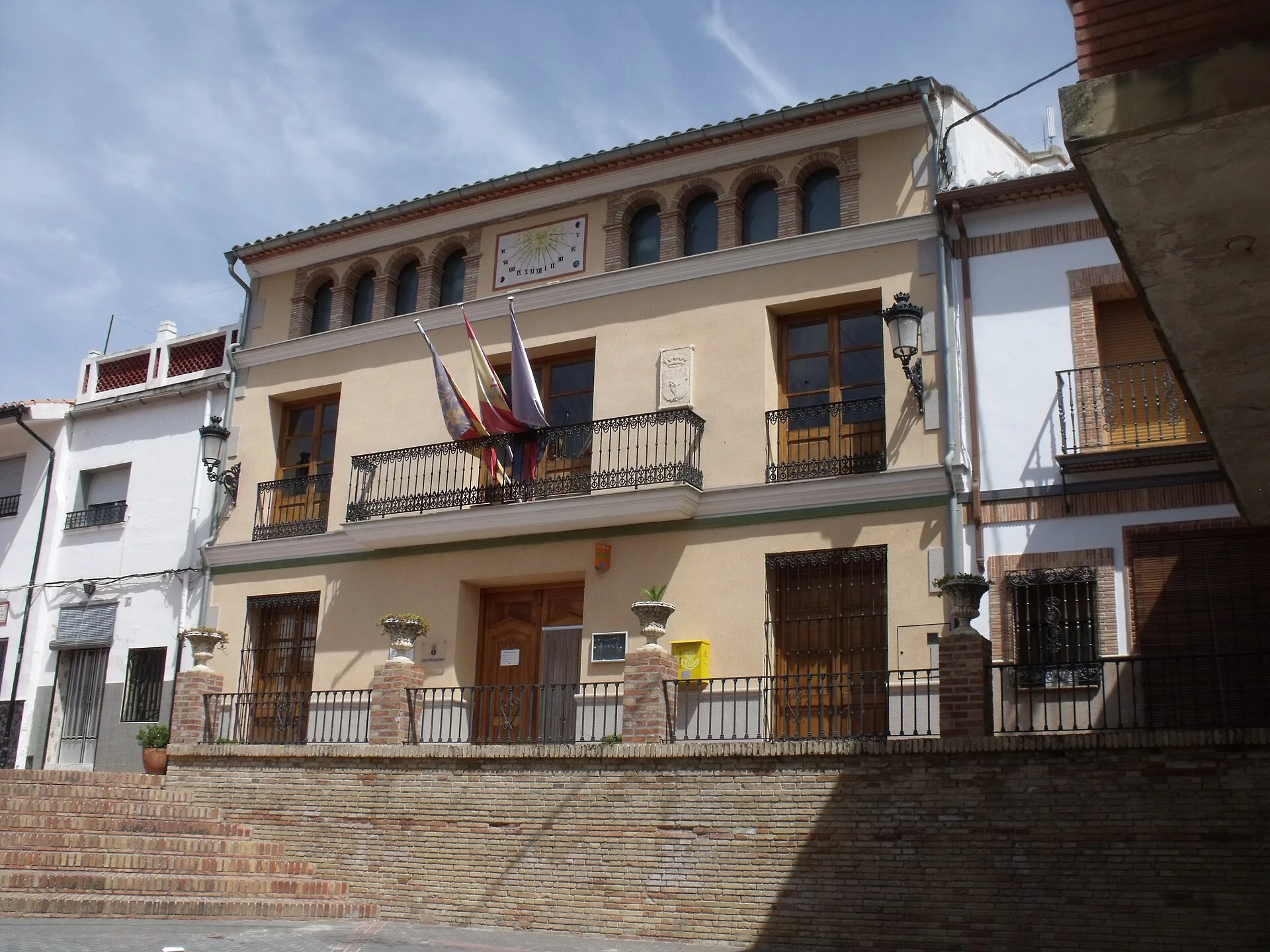
Ràfol de Salem concentrates religious heritage, water architecture and working memory within a very small area. The Town Hall façade and sundial provide an orientation point, but the most distinctive story emerges by linking the church, hermitage, washhouse and buildings associated with milling and olive oil. This is a deliberately slow stop in Vall d’Albaida, not a collection of interchangeable tourism claims.
Heritage and history
Santa Maria dels Àngels church records repeated rebuilding. The council suggests an earlier church may date to 1580 and says it was demolished after the 1748 earthquake; the chancel was rebuilt in 1748–1757, the nave expanded in the 1780s, and façade and bell-tower work belongs to the early twentieth century. A locally made late-eighteenth-century tiled floor strengthens the connection with the town’s ceramic tradition.
Sant Blai and Sant Francesc hermitage has a devotional tradition that the municipal source traces to the fifteenth century, although successive earthquakes damaged the building and the present form followed reconstruction after 1748. Its bell tower was added in 1826 and the Calvary in 1879–1880. The visible complex is therefore a layered product of rebuilding, devotion and topography, not an untouched survival from one period.
Landscape and route
The washhouse sits over the main irrigation channel; the council proposes a probable eighteenth-century origin, a roof added in 1916 and restoration in 2016. Molí de Baix represents grain milling, while the former El Salvador cooperative press, created in the 1950s, is now an oil museum. Olives, wine, silk and ceramics in the local history give these buildings a concrete economic setting.
Planning the visit
A compact route begins at the Town Hall and Santa Maria, descends to the washhouse, then continues to the hermitage and Calvary in suitable weather. Mill and oil museum access must be checked because they are not continuously open attractions. Ask local businesses about available Vall d’Albaida food and oil rather than assigning an undocumented signature recipe. Salem and nearby villages can extend the itinerary.
Responsible planning
This guide gives priority to municipal, provincial and regional-government sources. Its links let readers verify the original evidence and identify later changes. Use a current map for the journey and check transport on the day of travel: services to small municipalities can be infrequent, while an old timetable is not proof that a bus or facility still operates.
Distances should be adjusted for mobility, age and temperature. Sloping streets, uneven surfaces and buildings without continuous access can change a route substantially. Anyone requiring step-free access should ask the council or venue a specific question, because describing two places as close does not mean there are no steps. Respect for homes, crops, worship, local events and signs is part of a visit that benefits the community.
Related guides and data
Official sources and checks
The editing date records changes to the text, not a new check of opening hours, telephone numbers or accessibility. Specific verification dates, where recorded, appear beside the relevant information.