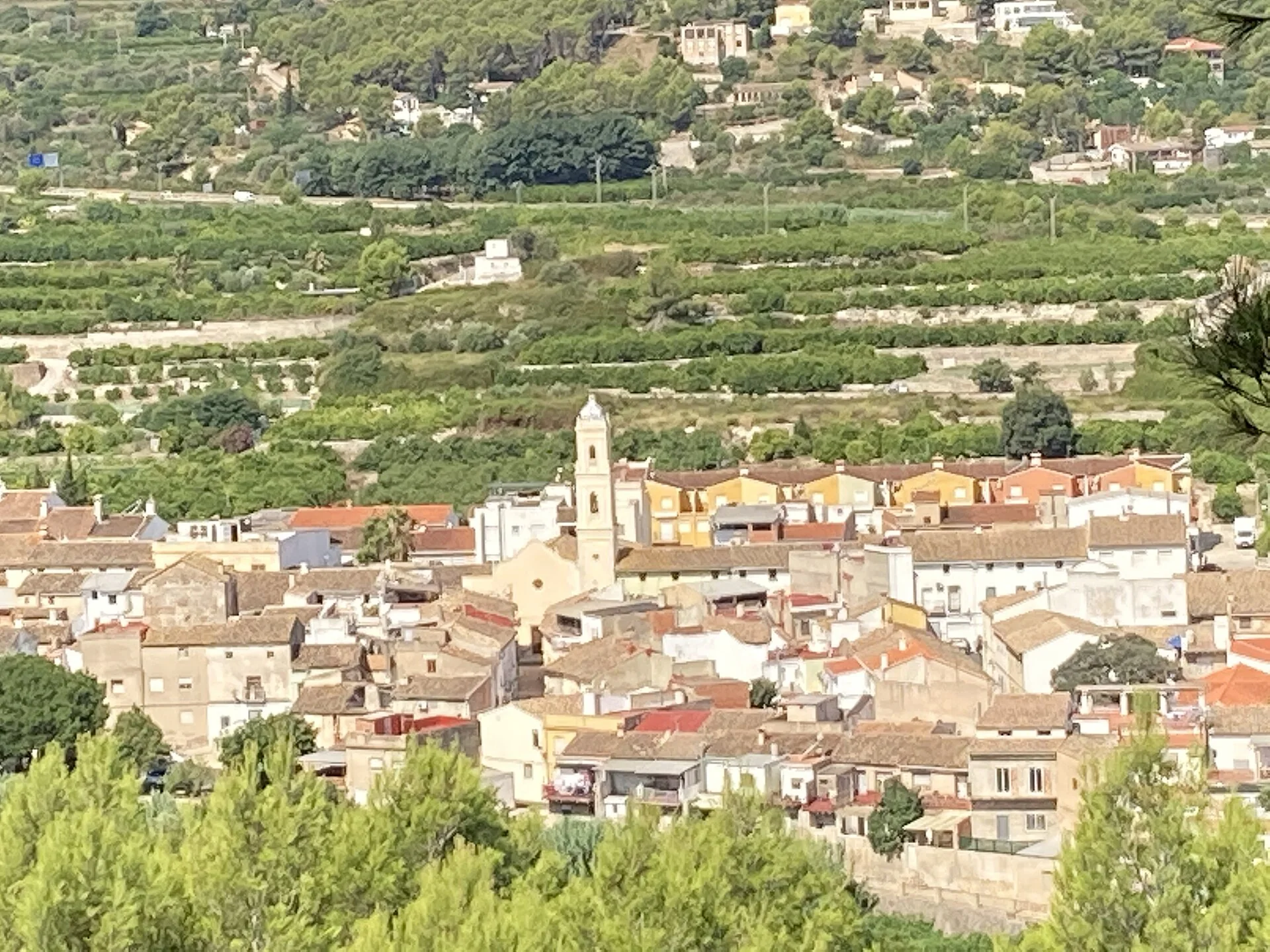
Alfahuir lies in the Vernissa valley between the Ador, Falconera and Grossa ranges. Its visit should not be reduced to “a monastery and a walk”. The Royal Monastery of Sant Jeroni de Cotalba is private property with admission and opening arrangements; Palma Castle is an exposed mountain ruin reached separately; and the Monasteries Route is a province-wide itinerary rather than a short loop around the village. Keeping these experiences distinct makes the plan realistic and explains the surrounding citrus landscape.
Royal Monastery of Sant Jeroni de Cotalba
The complex was founded in 1388 after Alfons el Vell, Duke of Gandia, bought Cotalba and gave it to the Hieronymite community from the Xàbia plain. Construction incorporated elements of an earlier settlement and continued over centuries. The result combines Mudéjar, Gothic, Baroque and Neoclassical architecture rather than representing a single period.
The monastery has been a protected Site of Cultural Interest since 1994. It remains privately owned and has operated a public visiting arrangement since 2005. Its official visitor description includes the Gothic tower, orange courtyard, Mudéjar cloister, former church and Baroque chapel, chapter house, oil mill, wine press, stables, kitchen, Romantic gardens and Gothic aqueduct. Available rooms, admission and tours may change and must be checked directly with Cotalba.
Connections with the March and Borja families
Pere March, father of the poet Ausiàs March, acted for the duke during the works, although the monastery’s own history cautions that it cannot be established whether he designed the plans. In the 16th century, María Enríquez de Luna and the Dukes of Gandia supported the complex. The upper cloister commissioned under her patronage is associated with the school of Pere Compte. These qualifications matter: documented connections should not become absolute architectural claims.
Palma Castle: a separate outdoor trip
Palma Castle, also called Ador Castle, is an 11th-century Andalusi hisn protected as a Site of Cultural Interest. Remains include a concentric rectangular structure and fragments of a cistern at 233 metres above sea level. Its position opens views towards the Falconera and Marxuquera ranges and other castles, but scenery does not remove the risks of an unstable ruin.
The official listing recommends approaching from Ador along Camí de la Pedrera. It should therefore not be presented as an immediate continuation of the Alfahuir village walk. Navigation, footwear, water and separate time are required. Keep away from walls, private plots and closed areas, and avoid the route in extreme heat, rain or unsafe ground conditions.
What the Monasteries Route really involves
The Monasteries Route links Sant Jeroni de Cotalba with Santa Maria de la Valldigna, Aigües Vives, La Murta and Corpus Christi in Llutxent across central Valencia. It is a multi-stage proposal with different travel modes, including a long equestrian itinerary. Visiting Cotalba does not mean completing the route; anyone following it needs current stages, surface information, accommodation and transport planning.
Alfahuir village and the Vernissa landscape
The compact village retains narrow streets associated with a former Islamic settlement. The castle to the east recalls Andalusi occupation, while today’s citrus groves show a later transformation of the valley. A short walk can locate the church and views towards the ranges, but ordinary undocumented buildings should not be promoted as invented monuments.
The featured photograph on this guide shows Alfahuir and its cultivated surroundings, not the monastery. That view helps explain the physical separation between the village, Cotalba and the castle ridge.
Plans for different amounts of time
A cultural half day
- Book or confirm the visit to Sant Jeroni de Cotalba.
- Follow only the areas included in admission and allow time for the cloisters, working spaces, garden and aqueduct.
- Finish with a brief Alfahuir walk and an overview of the citrus landscape.
A day focused on the castle
If Palma Castle is the main goal, treat it as a separate outing rather than attaching it to a fixed-time monastery tour. The ascent and ruins require more margin and favourable weather. The long Monasteries Route needs another plan and is not an extra stop for the same day.
Documented local food
Official visitor sources highlight baked rice, arròs en crosta, coques de dacsa and herb pastries. They also list pea or pepper-and-tomato flatbreads, pumpkin fritters and sweet-potato pastries. Availability varies with season and venue; ask for local dishes instead of assuming a fixed menu.
Responsible access
- Buy or reserve monastery admission only through its official channels and recheck opening on the day.
- A visitable private property is not open access: stay within the route indicated at Cotalba.
- For the castle, prepare a separate route, never climb walls and turn back when weather or terrain is unsafe.
- Do not enter citrus plots or pick fruit, and follow wildfire closures and signs concerning agricultural work.
Nearby places
Continue through La Safor with Almiserà, Ador or Almoines, checking access and avoiding several timed attractions in one rushed morning.
Related guide and official sources
The editing date records changes to the text, not a new check of opening hours, telephone numbers or accessibility. Specific verification dates, where recorded, appear beside the relevant information.