n
Sourced guide
Setting and character
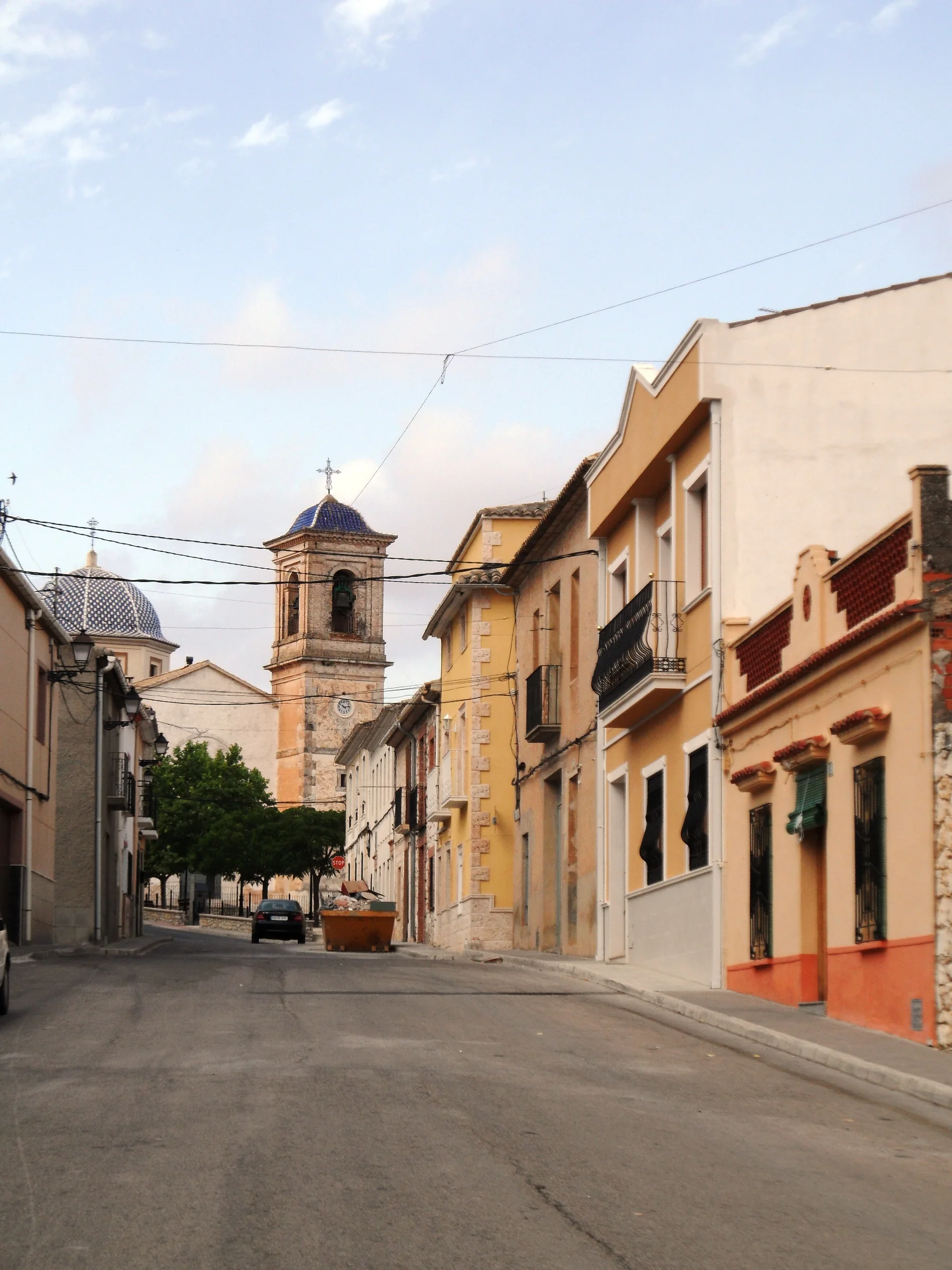
The image does not show the signing of the Treaty of Almizra or the castle site. It depicts Músic José Albero street with San Bartolomé church beyond. Correct identification prevents a modern street scene from being used as visual evidence of a medieval event and gives visitors an accurate town landmark.
Documented heritage
The council lists San Bartolomé church as cultural heritage. Puig d’Almizra is a separate hill site, preserving medieval Islamic rammed-earth walling and the stone base of a more characteristically Christian tower. Check access to the climb and hermitage, and never leave the designated route among fragile ruins.
Landscape and territory
Spain’s official gazette protects Puig d’Almizra as a historic site and links it to the 1244 treaty between the crowns of Aragon and Castile. That significance does not make every village corner the precise scene. The commemorative monument, archaeological remains and annual play are related but distinct.
How to organise the visit
A visit can begin with the photographed street and parish church, then allow a separate period for the hill. Gradient, sun and path condition make this separation useful. Anyone seeking the treaty reenactment must consult the annual programme: a festival tradition is not a daily, permanently accessible performance.
Food, boundaries and context
The Biar valley landscape helps explain the former frontier position but does not transfer neighbouring castles into this municipality. August festivities combine patronal observances, Moors and Christians and historical theatre, with changing dates and traffic arrangements. Confirm worship times, events and any restrictions before arrival.
Responsible planning
When planning a visit to Campo de Mirra / El Camp de Mirra, check the linked council or tourism page, the weather forecast and any notices about fire risk, works or festivities. Churches are not museums with permanent opening hours, while farms, terraces and houses mentioned may be private. Carry water and suitable footwear, avoid blocking narrow streets and never enter riverbeds, ruins or closed structures. Timing depends on gradient, mobility and stops, so keep the town walk separate from a mountain route or an outlying drive.
How to use this information
For Campo de Mirra / El Camp de Mirra specifically, the linked sources support the names, dates and features used to explain the municipality, but they do not replace a real-time check. A heritage record may remain historically accurate even when access, signs or the building’s use changes. This guide therefore separates established facts from variable recommendations and does not promise admission, tours, toilets or food service. Where institutions provide different dates, they are treated as phases or the discrepancy is stated instead of being hidden.
When exploring Campo de Mirra / El Camp de Mirra, accessibility differs greatly between a square, hermitage, viewpoint and trail. Anyone needing step-free routes, adapted public transport or accessible toilets should confirm them with the council before travelling. Bus frequency, taxis and charging points can also vary in small villages. Save useful contact details, download a map before leaving the settlement and allow enough daylight to return. No scenic reference is permission to cross private property or continue in poor weather.
Frequently asked questions
How much time should I allow?
For Campo de Mirra / El Camp de Mirra: Allow roughly one to four hours for the settlement and plan the described routes or outlying sites separately.
Are interiors and natural sites always accessible?
For Campo de Mirra / El Camp de Mirra: No. Confirm opening times, permission, trail condition and restrictions through official sources before travelling.
How is this different from a generic template?
For Campo de Mirra / El Camp de Mirra: Every place, date, image and municipal boundary has been checked for this municipality, with the supporting sources linked below.
Related guides and local data
Official sources and verification
n
The editing date records changes to the text, not a new check of opening hours, telephone numbers or accessibility. Specific verification dates, where recorded, appear beside the relevant information.