Valencia is one of the easiest Spanish cities to explore without a car. Its manageable size, public transport network, metro and tram connections, urban buses, bike lanes and green areas such as the Turia Gardens make it possible to organise most daily and tourist journeys without relying on a private vehicle.
This guide brings together the most practical options for getting around Valencia in 2026, whether you live in the city or are visiting for a few days. The key is to combine each transport option according to the journey: metro for longer distances, EMT buses for neighbourhood connections, bikes for short trips and walking for central areas.
Metrovalencia: the easiest option for longer distances
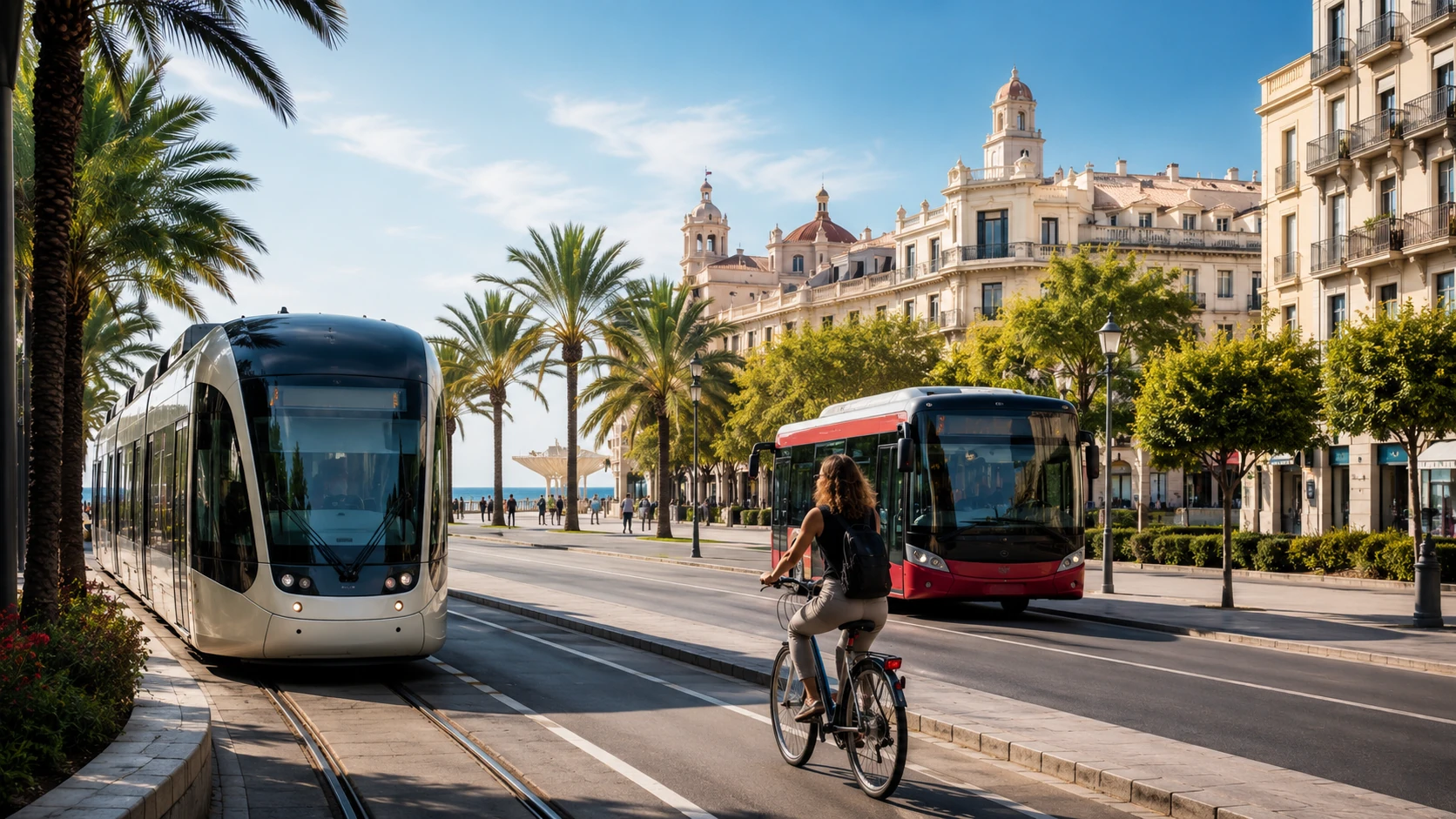
Metrovalencia is one of the fastest ways to connect different parts of the city and the metropolitan area. It is especially useful for travelling to and from the airport, reaching outer neighbourhoods, combining metro and tram journeys or avoiding traffic at peak times.
Before leaving, it is worth checking your route on the official Metrovalencia website or app, as travel times may vary depending on the line, day and time slot. For visitors, choosing accommodation near a metro station can save many taxi or car journeys during the trip.
EMT Valencia: buses for neighbourhoods and the city centre
The EMT Valencia urban bus network is very useful for routes where the metro does not go directly. It is a practical option for moving between neighbourhoods, reaching the city centre, visiting shopping areas or completing the final part of a journey.
The official EMT app allows users to check stops, lines, arrival times and recommended routes. For occasional bus users, mobile ticket options can make travel easier, especially for visitors who do not have a physical transport card.
Valenbisi and cycling: ideal for short trips
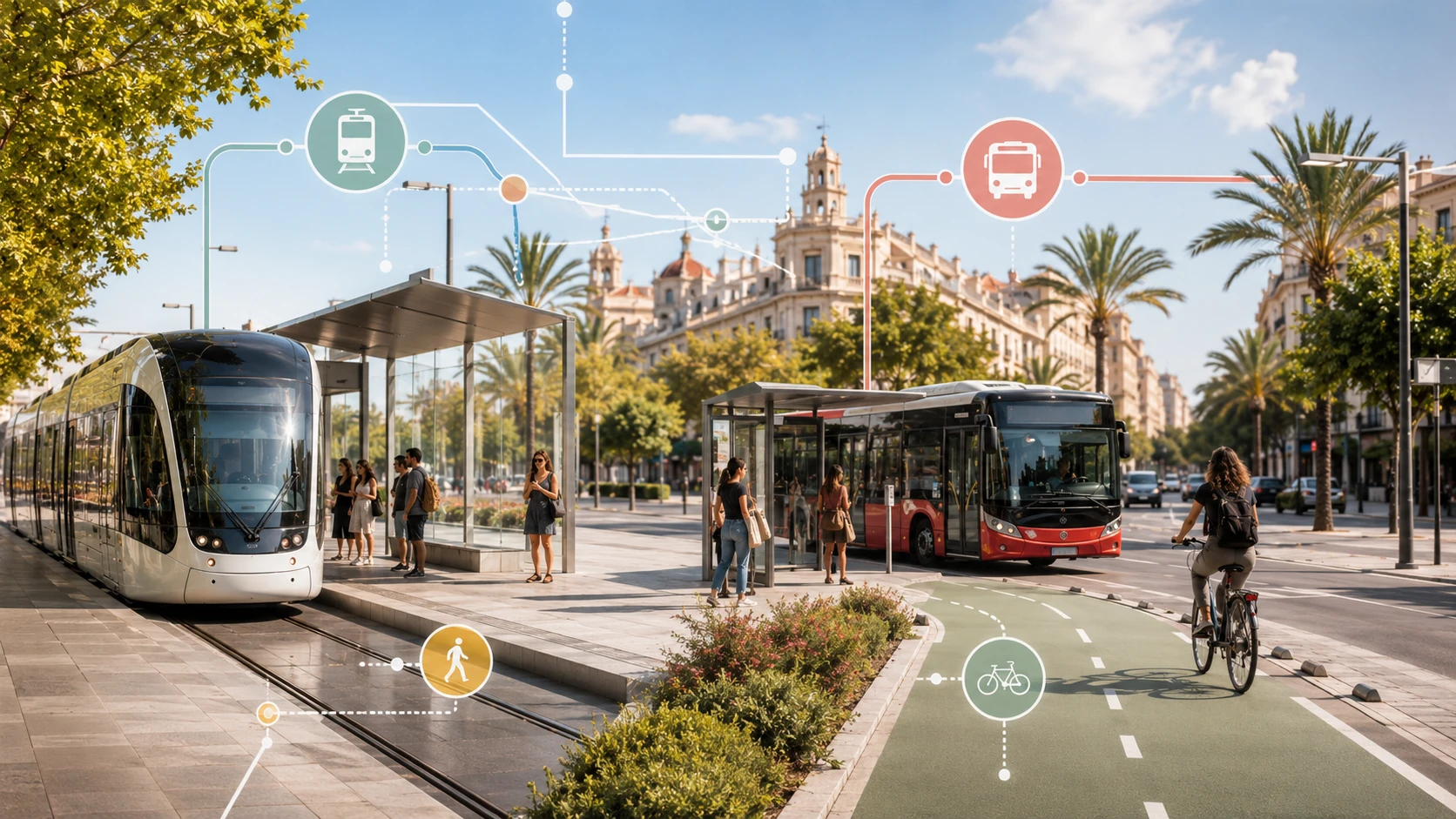
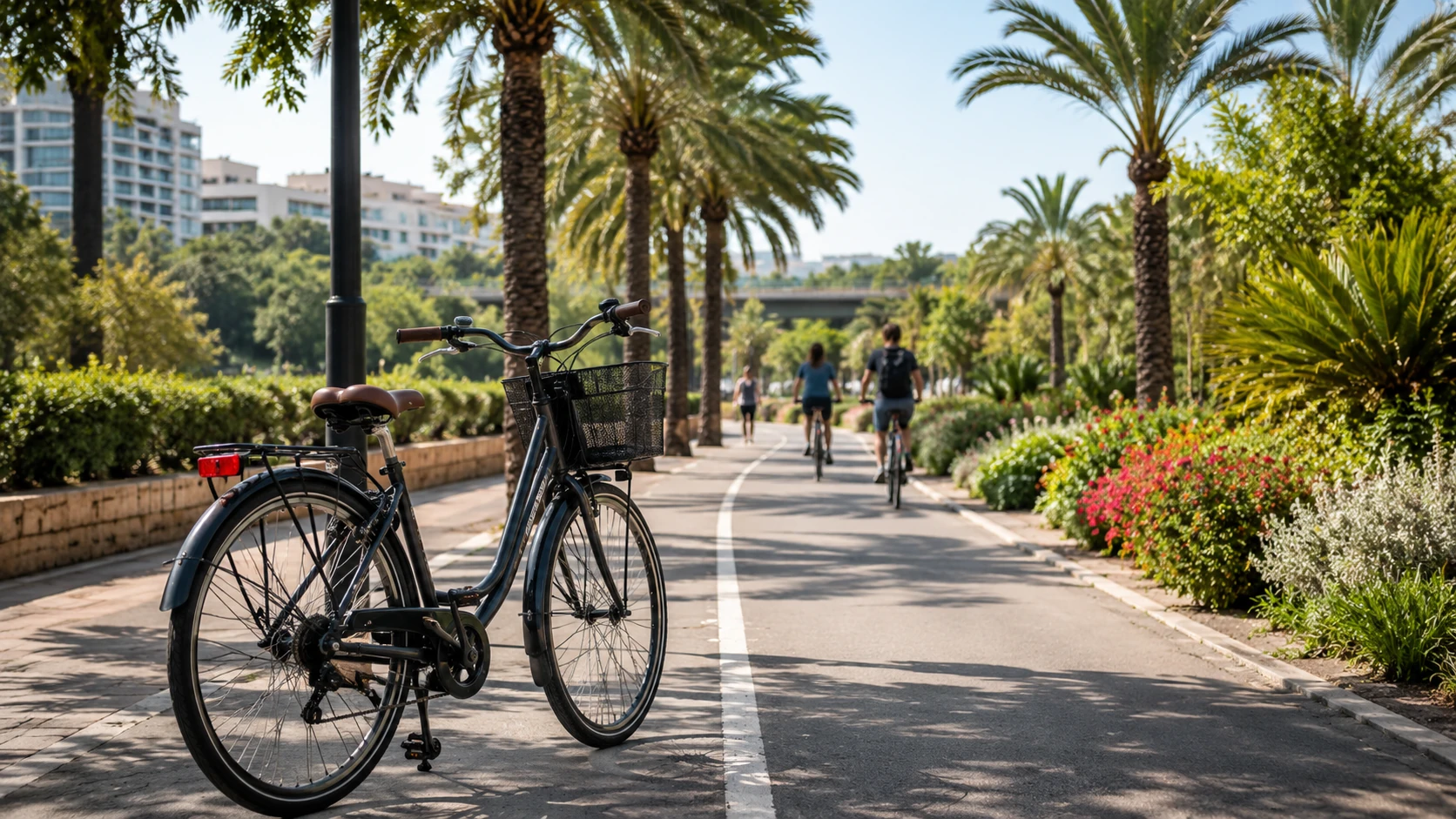
Cycling is a very interesting alternative in Valencia, especially for short journeys, flat areas and routes through the Turia Gardens. Valenbisi allows users to check stations and bike availability, which makes planning easier before leaving.
To cycle safely, it is advisable to use bike lanes whenever possible, avoid riding on pavements where it is not allowed and take extra care at junctions, roundabouts and busy traffic areas. In summer, carrying water and avoiding the hottest hours of the day is also recommended for longer journeys.
Walking in Valencia: historic centre, Turia Gardens and nearby districts
Many areas of Valencia are best enjoyed on foot. The historic centre, Plaza de la Virgen, La Lonja, the Central Market, Colón, Ruzafa and the former Turia riverbed offer pleasant routes without the need for motorised transport.
For visitors, a good strategy is to use metro or bus to reach a specific area and then explore it on foot. This avoids wasting time looking for parking and helps discover streets, shops and corners that are often missed by car.
How to get from Valencia Airport without a car
Valencia Airport is connected to the city by public transport. For many travellers, the metro is the most convenient option because it avoids traffic and connects with important points of the network. If you are visiting Valencia for one, two or three days, it may be worth checking whether a tourist card with transport included is convenient.
Before buying any ticket or pass, compare journey duration, accommodation area, expected number of trips and possible discounts. The most complete option is not always the most cost-effective: it depends on each traveller’s real plan.
Practical tips for getting around better
- Always check your route before leaving: frequencies may vary depending on time, holidays or service disruptions.
- Combine public transport and walking: it is often faster than trying to travel door to door by car.
- Avoid peak times when possible: especially around the city centre, main stations and beach areas.
- Check bike availability: before relying on a specific Valenbisi station.
- Choose well-connected accommodation: a nearby metro station or several EMT lines can greatly improve the experience.