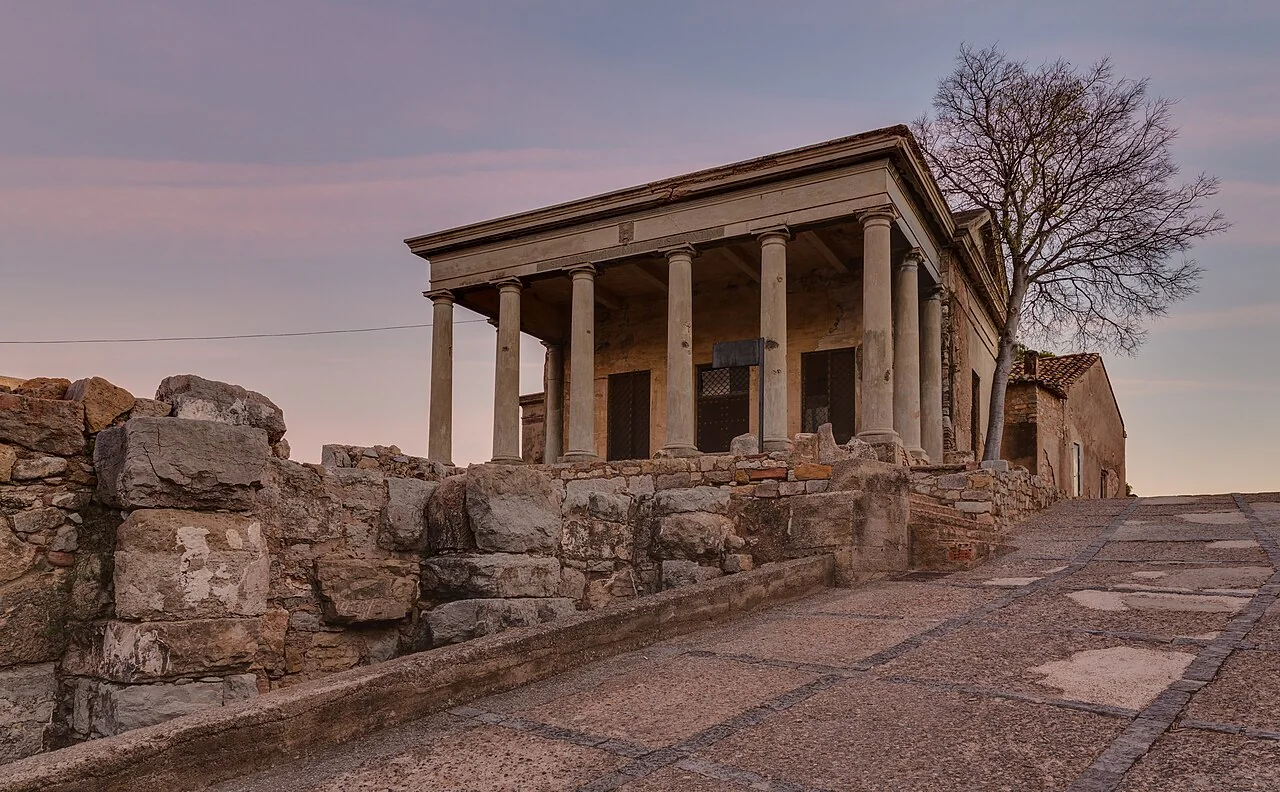
The photograph shows a porticoed building within Sagunto Castle, beside walls and archaeological remains. It is not an overview of the fortress, and the frame alone cannot assign the structure to a specific phase. The hill contains work from different periods, while the theatre occupies its slope and the industrial heritage stands in the Port.
The castle is a long-lived enclosure
The fortification stretches across the summit once occupied by the Iberian town of Arse and preserves Roman, Islamic and later alterations. The Roman plaza and separate defensive sectors do not form a single building. The enclosure’s length, uneven ground and sun exposure make the climb a visit in its own right.
The theatre and Jewish quarter occupy the slope
The Roman theatre was built in the first century and uses the hillside below the castle. Farther down, the former Jewish quarter retains a network of streets entered near Plaza Mayor. Theatre, Jewish quarter and Historical Museum explain the ancient and medieval town without merging their chronology.
Puerto de Sagunto explains the company town
About five kilometres from the historic centre, Blast Furnace No. 2 recalls the steel industry that transformed the Port during the twentieth century. The present structure exceeds sixty metres, was rebuilt in 1961 and operated until the 1984 closure. The spare-parts warehouse, workshops and workers’ district extend a story distinct from the archaeological one.
This documentary review identifies the image cautiously and separates castle, historic slope and industrial Port. It does not verify the portico’s attribution, opening, admission, guided visits, works, surfaces, gradient, shade, railings or accessibility on site.
Related guides and local data
Sources consulted
- Turisme Comunitat Valenciana — Sagunto romano
- Turisme Comunitat Valenciana — Alto Horno nº 2
- Ayuntamiento de Sagunto — patrimonio histórico e industrial
Documentary sources consulted on 31 August 2026. This is not an on-site inspection or a full check of opening hours, telephone numbers or accessibility. Any visiting conditions mentioned come from the linked sources.
The editing date records changes to the text, not a new check of opening hours, telephone numbers or accessibility. Specific verification dates, where recorded, appear beside the relevant information.