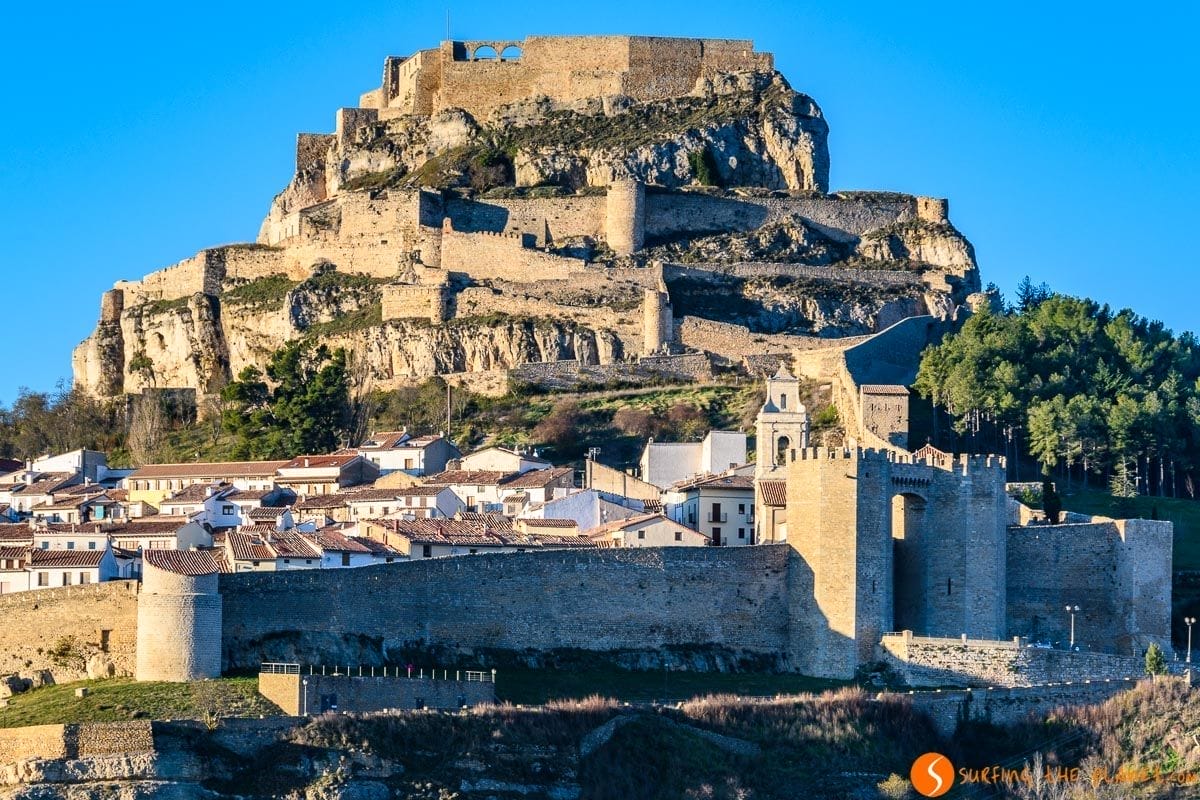
Castelló in Ribera Alta is not Castelló de la Plana. The municipality was also known as Villanueva de Castellón, a name that still appears in older addresses and records. This guide distinguishes the two destinations and builds the visit around specific places documented by the Valencian Community’s official tourism portal.
What to see in the town centre
A useful way to understand Castelló is through its traditional agricultural houses from the 18th, 19th and 20th centuries. Their upper floor, known as the andana, was used for silkworm cultivation. These buildings show how domestic space, farming and household income were connected. One of the houses contains an ethnographic collection; check whether it is open to visitors and confirm its hours before travelling.
The church square brings two stops together. The Parish Church of the Assumption of Our Lady dates back to the 15th century, although it has been altered on several occasions, and La Aurora Chapel stands on the same square. The ensemble can always be read from the public space, but anyone wishing to enter should check opening arrangements because worship and celebrations may affect access.
The former Santo Domingo convent and college provides a different architectural layer, combining a neo-Gothic design with clear Art Nouveau influences. The Municipal Market, opened in 1928, connects the route with everyday local life. It can be paired with Santa Bárbara Parish Church without turning the walk into a disconnected list of buildings.
El Castellet and the Font Amarga nature area
Outside the urban route, the ruins of El Castellet belong to a former Muslim fortress. Remains of a Bronze Age settlement can also be found nearby. This is an archaeological place, not necessarily a visitor attraction prepared for every level of mobility: respect closures, signs and ground conditions, and never move material or enter restricted areas.
Font Amarga offers a separate nature outing, with a recreational area and environmentally valuable vegetation. Before setting out, check the forecast, wildfire risk, access conditions and current rules on fire or picnics. Carry drinking water and suitable footwear; a place name containing “font” does not guarantee potable water or a permanent flow.
A practical route without unnecessary travel
- Start in the church square and locate the Assumption church and La Aurora Chapel.
- Continue through streets with agricultural houses, the ethnographic collection and the market.
- Add Santo Domingo and Santa Bárbara according to opening arrangements and available time.
- Choose only one out-of-town stop—El Castellet or Font Amarga—when you have half a day.
The urban section can be explored comfortably in a few hours. El Castellet and Font Amarga require separate checks for access and transport. Do not assume that every stop can be joined safely on foot without knowing distance, surface and gradient. Visitors with reduced mobility or a pushchair should ask about steps, slopes, toilets and paving before fixing the route.
Accommodation in the historical tourism information
These establishments appeared in historical municipal tourism information. Names, categories, capacity and availability may have changed, so consult the official tourism register and contact the property directly before booking.
Canonche
1-star hotel
- Historical address: N-340 road, km 855, Castelló.
- Historical capacity: 33 places.
El Polígono
Guesthouse
- Historical address: El Pla industrial estate, plot B4, Castelló.
- Historical capacity: 9 places.
Sources and checks before travelling
- Valencian Community Tourism: official Castelló page.
- AEMET municipal weather forecast.
- Official tourism accommodation finder.
Editorial review: 24 August 2026. Opening hours, works, services and access must be checked with the responsible source on the day of the visit.
Frequently asked questions
Is Castelló the provincial capital?
No. This guide covers Castelló in Valencia’s Ribera Alta district, formerly called Villanueva de Castellón, not the city of Castelló de la Plana.
What works best for a half-day visit?
Use the urban walk through the square, agricultural houses, market and Santo Domingo. Add El Castellet or Font Amarga only after checking access and travel time.