A visit with context
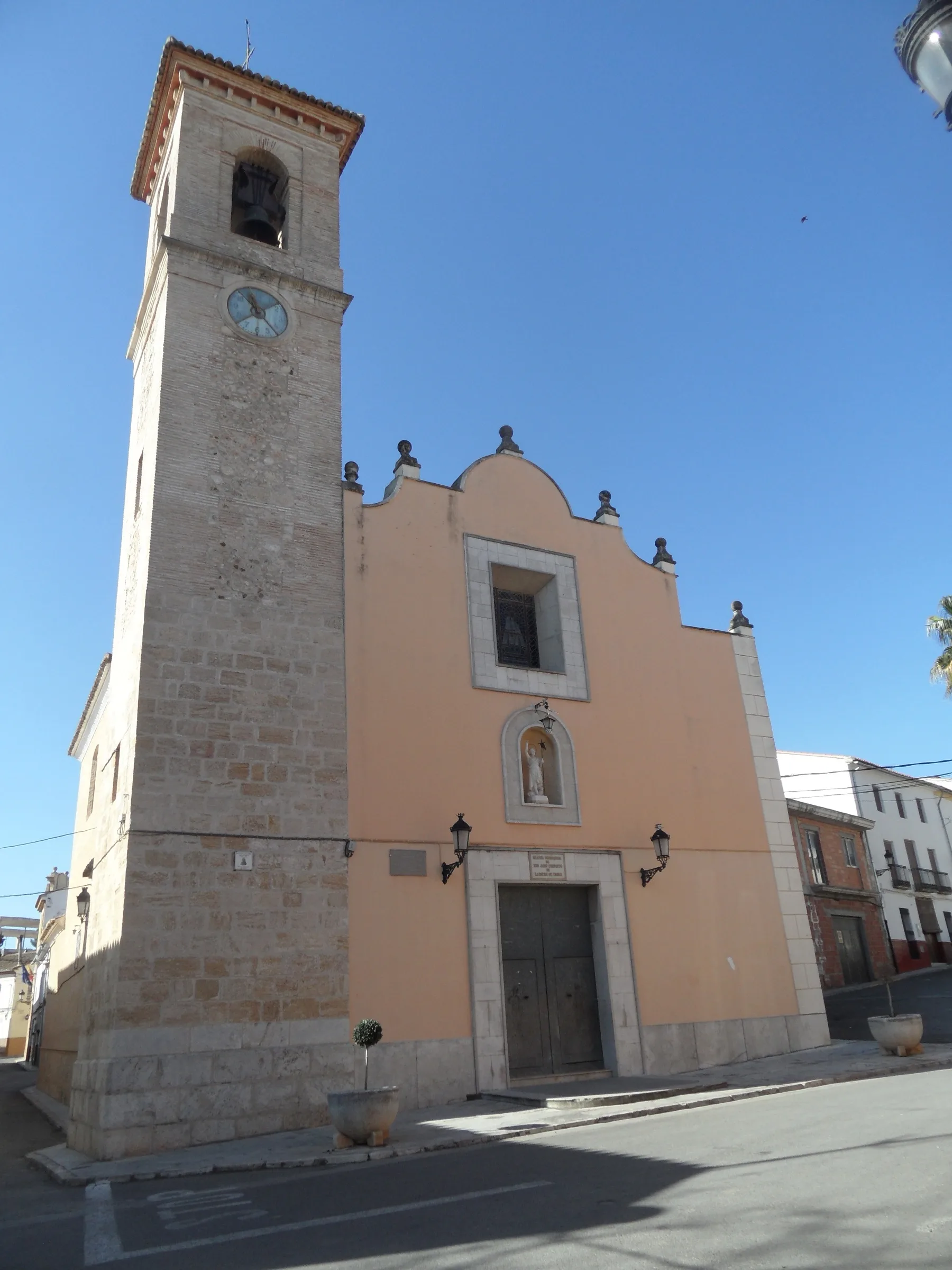
Llanera de Ranes stands below Serra d’Énguera near the left bank of the Cànyoles. Sant Joan Baptista’s bell tower identifies the settlement far better than the previous featured image, which incorrectly showed a street in the city of Valencia named Calle Llanera de Ranes. The replacement genuinely depicts the municipality’s church and resolves that geographic mix-up without changing the guide’s public URL.
Heritage and history
The nineteenth-century Sant Joan Baptista church, as dated by the provincial tourism authority, anchors a walk through the centre. The same source identifies its parish museum and the Calvary and hermitage on nearby higher ground. This pairing leads naturally from religious architecture to landscape. Interior access depends on services and local custodians, so travellers should contact the council instead of building a schedule around an unconfirmed opening.
Rafael Boluda Watercolour Museum offers unusually specific local content. The provincial listing describes twenty-seven watercolours and three drawings by the artist, including popular and everyday scenes, with Spanish and international works on other floors; it also mentions children’s Fallas sketches. Luis Perales Ethnological Museum uses several floors and a basement for farm tools, a kitchen, bedroom, domestic objects and tobacco material. Current opening times must be checked rather than copied from an old listing.
Landscape and route
A logical route starts at Sant Joan and the central streets, continues through one museum, and finishes at the Calvary if heat and mobility permit. Arnadí, a baked pumpkin and sweet-potato confection traditionally presented in an earthenware dish, is documented by the province. It also mentions a national competition in December, but the current edition and date require annual confirmation. Nearby Costera towns can extend the trip without assigning their landmarks to Llanera.
Responsible planning
This guide gives priority to municipal, provincial and regional-government sources. Its links let readers verify the original evidence and identify later changes. Use a current map for the journey and check transport on the day of travel: services to small municipalities can be infrequent, while an old timetable is not proof that a bus or facility still operates.
Distances should be adjusted for mobility, age and temperature. Sloping streets, uneven surfaces and buildings without continuous access can change a route substantially. Anyone requiring step-free access should ask the council or venue a specific question, because describing two places as close does not mean there are no steps. Respect for homes, crops, worship, local events and signs is part of a visit that benefits the community.
Related guides and data
Official sources and checks
The editing date records changes to the text, not a new check of opening hours, telephone numbers or accessibility. Specific verification dates, where recorded, appear beside the relevant information.