Cerdá is one of La Costera’s smallest municipalities, close to Xàtiva, Canals and l’Alcúdia de Crespins. Its scale calls for a short, attentive visit rather than an inflated list of unnamed attractions. Within a few streets, visitors can connect Sant Antoni Abat church, the Marqués de Montortal palace, the 1935 public washhouse and ceramic panels on private façades. The Cànyoles river and January festivities complete a distinctly local story.
What to see in Cerdá
Sant Antoni Abat parish church
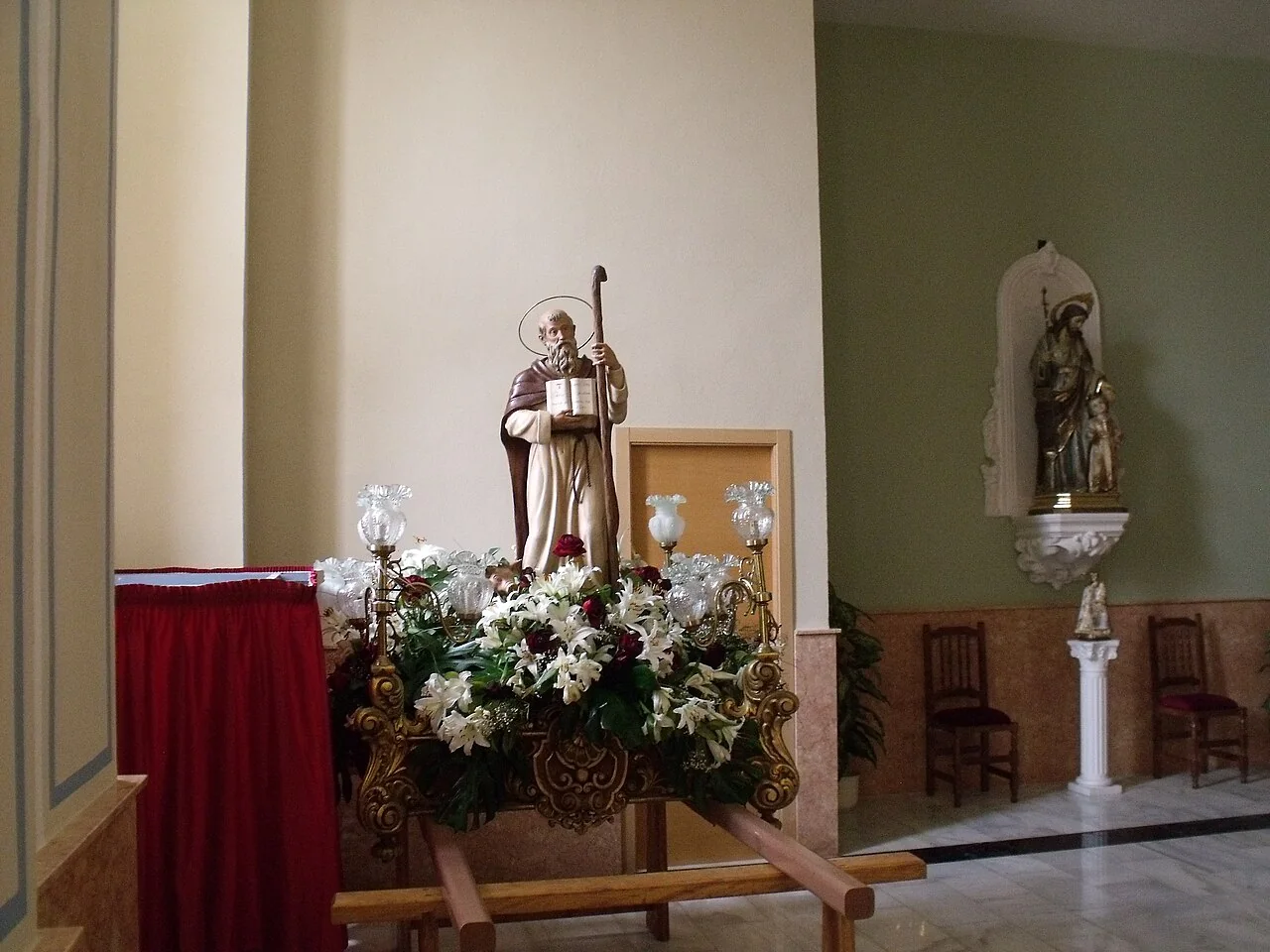
València Turisme dates the church to the early sixteenth century, the same period as the palace. The featured photograph was taken inside and shows a flower-decorated processional image on a carrying platform; it is not a town-centre panorama. The church remains a place of worship. Its exterior can always form part of the walk, but interior access depends on a genuine opening and must never disrupt services.
Marqués de Montortal palace
The provincial tourism listing also dates the palace to the early sixteenth century. It helps explain the seigneurial dimension of this very small settlement, but this guide does not imply that it is a museum or that visitors may enter. View it from public space, respect the property and obey any signs. Its relationship with the parish church provides the clearest reading of the centre’s civil and religious architecture.
The 1935 public washhouse
The washhouse represents everyday heritage associated with water, domestic work and twentieth-century social life. The official listing dates it to 1935. Check its present condition before approaching, do not climb on basins or structures and keep passages clear. Its known date and traditional purpose are informative enough without turning it into a generic tale about irrigation.
Ceramic panels on façades
Official tourism sources highlight ceramic panels preserved on some privately owned buildings. Observe them from the street without entering doorways or courtyards. They connect devotion, craft and domestic space. The panels need not all share the same date or legal status, so describe only what can be seen and do not assign artists, dates or dedications without an individual heritage record.
The Cànyoles and Costera de Ranes
The Cànyoles surroundings add landscape to the visit. The Valencian tourism portal proposes including Cerdá on the Costera de Ranes route, a signed itinerary connecting settlements and old chapels in the corridor. This does not turn every farm track into a visitor trail. To follow the entire route, check the official course, distance, surface and weather. For a short visit, the village and one safe public viewpoint over the plain are sufficient.
A ninety-minute walk
- Start at Sant Antoni Abat. View the exterior and check whether an opening is compatible with worship.
- Find the Marqués de Montortal palace. Read its façade from the public road and never assume admission.
- Continue to the washhouse. Relate this 1935 facility to everyday life and historic water use.
- Explore streets with ceramic panels. Observe them respectfully before finishing towards the Cànyoles landscape.
The compact route need not fill an entire morning. Any extension into neighbouring municipalities should be planned as a separate journey.
Sant Antoni and the land of bonfires
Patronal festivities take place on 16 and 17 January in honour of Sant Antoni Abat. Tourism information lists the collection of the saint’s flag, procession, offering, floats and plantà de la foguera. Turisme La Costera includes Cerdá in its Land of Bonfires route alongside other winter celebrations. The exact programme changes annually: consult current local notices and keep a safe distance from fire and fireworks.
Food and a responsible visit
The provincial profile names oven-baked rice and paella as Cerdá food references. They are reasons to ask what is actually available that day, not a promise of permanent restaurant service in a small village. Use current information for transport and parking and never block narrow streets. Avoid the hottest hours in summer; stay away from the riverbed during rain or warnings. A good visit connects four documented sites and leaves the municipality as it was found.
Related guides and data
Official sources and checks
The editing date records changes to the text, not a new check of opening hours, telephone numbers or accessibility. Specific verification dates, where recorded, appear beside the relevant information.