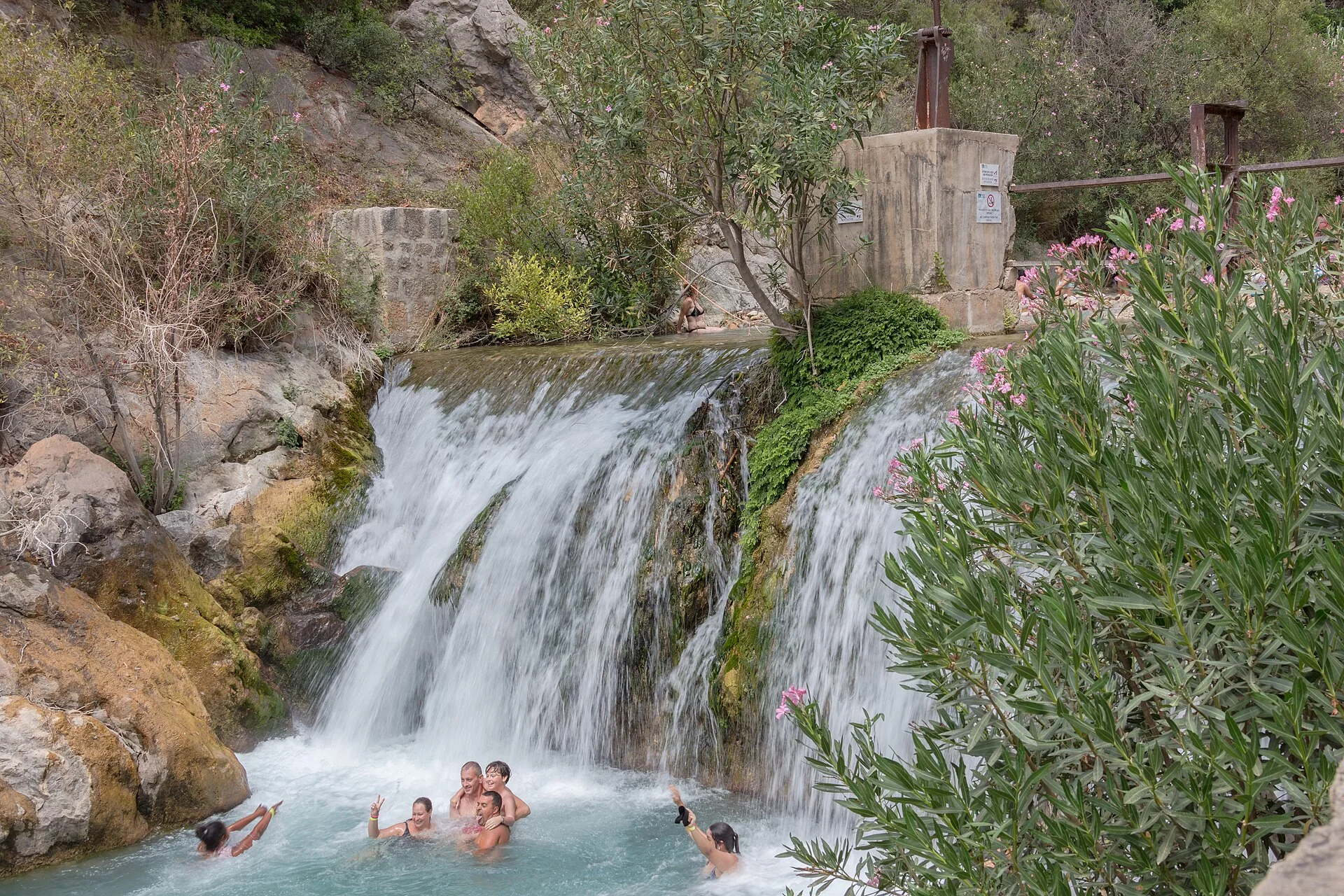
Callosa d’en Sarrià combines a historic mountain town with a water attraction outside the centre. Fonts de l’Algar lies about three kilometres from the urban area and has its own admission, hours and rules. Visiting only the waterfalls misses Callosa’s walled origins, water heritage and distinctive loquat-growing landscape.
The Portal and former walled town
Bernat de Sarrià promoted the castle that gave the town part of its name. Remains of its defensive perimeter are incorporated into later buildings, while the Portal is the only surviving gate from the old walls. Explore the centre for these traces and changes in level rather than expecting a complete castle that can still be visited as a single monument.
Sant Joan Baptista Church and museum
The Church of Sant Joan Baptista is one of the centre’s principal landmarks. The Ethnology and Archaeology Museum connects objects, trades and customs with life before tourism at the Fonts. Confirm opening before relying on an interior visit; a municipal museum should not be presented as continuously accessible without checking the tourist office.
Poador de la Font Major
The Poador de la Font Major washhouse and watering place was built in the eighteenth century and retains twelve spouts. It is a specific piece of hydraulic heritage and a traditional meeting point. Its purpose links water in the town with irrigation channels, springs and farming without confusing it with the river attraction outside the centre.
A town walk shaped by water
The Portal, church and Poador can be read as one compact historic sequence, but the value lies in their different functions: defence, worship and everyday water supply. Look for surviving wall fragments incorporated into later properties without treating private façades as museum exhibits. This route also gives context to the managed water seen later at the Fonts and prevents the old centre from becoming a token stop before the cascades.
The loquat landscape
Callosa’s terraces are closely associated with loquats protected by a Designation of Origin. The fruit is seasonal: outside the harvest period, visitors can still read the cultivated landscape and look for preserved products, but freshly picked fruit cannot be promised. Farm tracks are working spaces, not an invitation to cross private plots.
Fonts de l’Algar: what the visit involves
Fonts d’Algar was declared a Protected Wetland in 2002. Its visitor circuit follows the river for about 1.5 kilometres through limestone, springs, cascades and pools known as tolls. This is not an unrestricted mountain path: admission control, seasonal hours and visitor rules should be checked on the site’s website.
Flow, water temperature, permitted bathing areas and restrictions can change. Wear footwear with reliable grip, follow instructions and do not jump into pools or leave the authorised route. A short circuit can still have wet surfaces and heavy visitor numbers.
Do not confuse the circuit with a Bèrnia hike
Signs in the wider area may point towards the mountains, but an outing to Fort de Bèrnia is a separate and more demanding activity. It needs mapping, time, water, appropriate weather and its own risk assessment. It should not automatically be added to a day at the Fonts merely because it appears nearby.
Two coherent plans
- Heritage and farming: Portal, church, museum if open, Poador and the terraced landscape.
- Town and Fonts: historic centre early, then travel to the water site with admission and hours already verified.
Continue inland
The guides to Castell de Castells, Guadalest and Confrides offer rock art, fortification and high mountain scenery rather than repeating the same valley template.
Separating the centre from the natural site
Plan Callosa de Ensarriá as two distinct visits: the Portal, Sant Joan Baptista, Poador and museum belong to the settlement, while Fonts de l’Algar has its own admission, rules and access several kilometres away. The official regional source confirms its protected-wetland status. Check capacity, water conditions and mobility before travelling, and remember that loquat terraces remain private working farms.
Official sources and verification
The editing date records changes to the text, not a new check of opening hours, telephone numbers or accessibility. Specific verification dates, where recorded, appear beside the relevant information.