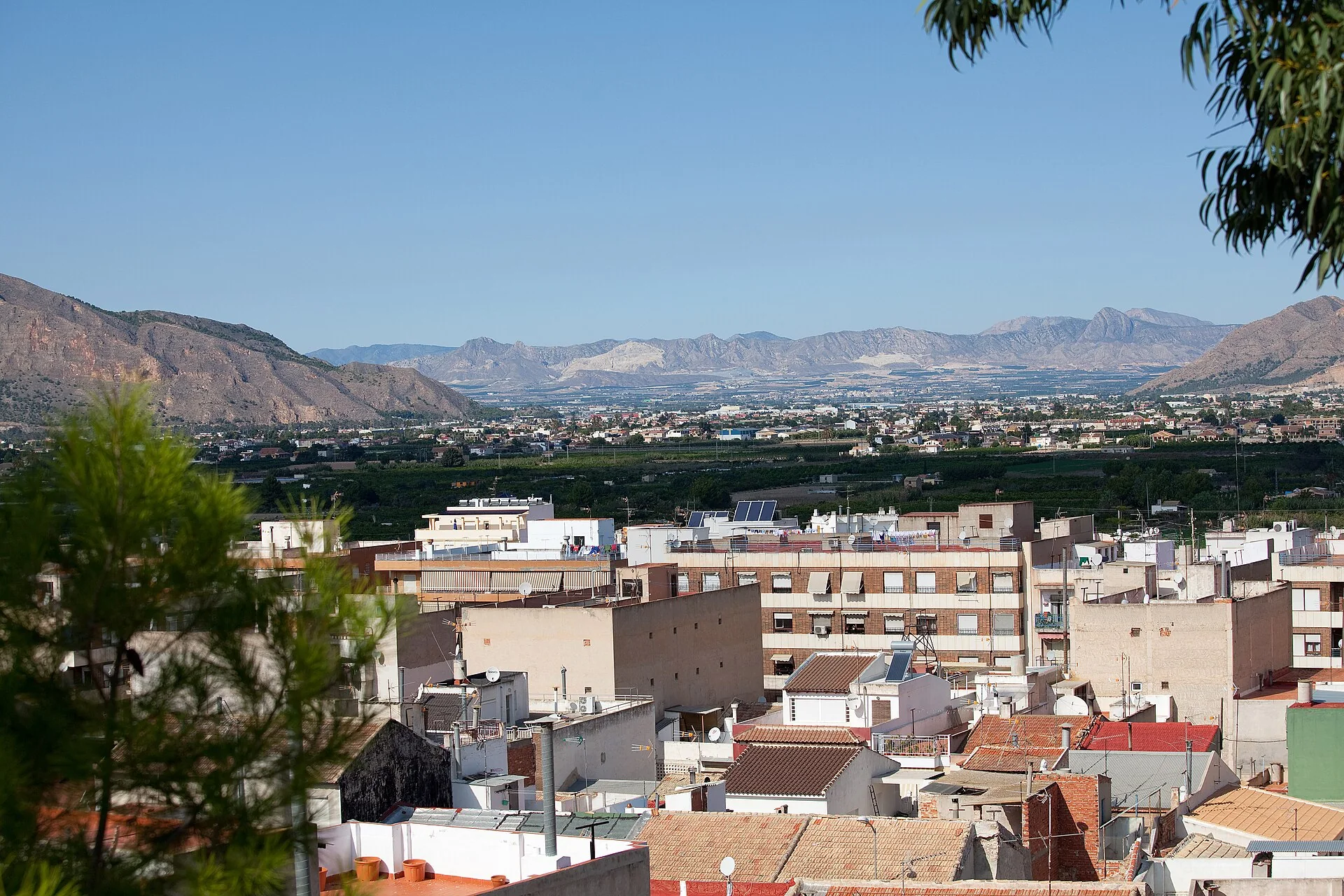
Bigastro, in the Vega Baja, has three useful reference points for planning a visit: traditional town centre and local architecture, parish church and town squares and agricultural landscape and local water heritage. The route combines local heritage, farming and dry landscapes, with time to add local scenery and food. A final reference point for the itinerary is walk through rural lanes and public spaces.
What to see
Traditional town centre and local architecture
Shows an important part of the area’s architecture, traditional uses or local memory.
Parish church and town squares
Fits naturally into a heritage walk through the centre.
Agricultural landscape and local water heritage
Adds nature and wider views to the urban route.
Walk through rural lanes and public spaces
Completes the route with a place directly associated with the municipality.
Suggested route
- First stop: Traditional town centre and local architecture. It establishes the setting and introduces one of Bigastro’s main local features.
- Second stop: Parish church and town squares. Connect it with nearby streets or public spaces.
- Third stop: Agricultural landscape and local water heritage. Check current official access conditions where necessary.
- Final stop: Walk through rural lanes and public spaces. Add local food or a nearby town if time allows.
Landscape and nature
- market gardens and Segura River landscape
- salt marshes, hills or coast depending on the municipality
Local food
- produce from the Vega Baja market gardens
- rice dishes, pastries and traditional Segura cuisine
Practical information
Half a day is normally enough for the centre and its main sight; extend the route when adding rural paths or a nearby town. Check opening times, avoid the hottest hours and respect farmland and irrigation features. When the route includes interiors, also check the last admission time.
Nearby towns
Callosa de Segura, Catral, Cox
Frequently asked questions
What should you not miss on a first visit to Bigastro?
For a first visit, prioritise traditional town centre and local architecture, parish church and town squares and agricultural landscape and local water heritage, which bring together local heritage, farming and dry landscapes.
How long should you spend in Bigastro?
The suggested route is designed as a half-day visit. Final timing depends on interior access and whether you add trails, beaches, museums or food stops.
Which nearby towns combine well with Bigastro?
A wider route can continue to Callosa de Segura, Catral and Cox, after checking travel times and opening conditions.
Related guides and local data
Official sources and verification

Tourist accommodation and checks before visiting
This information helps review accommodation, capacity and practical details before planning a visit. Availability, exact address and conditions for any accommodation should always be checked with official sources or with the establishment.
Registered tourist homes
List of tourist homes included in the municipality’s historical information. Always check registration, availability, address and conditions before booking.
VT-469782A
- Address: CALLE BENEJUZAR, 1, PISO A, PUERTA F, BIGASTRO
- Capacity: 6 places
VT-447667A
- Address: CALLE ESCOCIA, 16, BIGASTRO
- Capacity: 4 places
VT-453893A
- Address: CALLE INGLATERRA, 18, BIGASTRO
- Capacity: 6 places
VT-461217A
- Address: CALLE LA PAZ, 72, PISO 1, BIGASTRO
- Capacity: 4 places
Turn the Bigastro information into a realistic route
The earlier selection is a starting point, but a visit to Bigastro works better when stops are grouped by area rather than popularity alone. Put the place that matters most first, verify access, and then add one or two nearby stops. This reduces travel, leaves room for delays and prevents “What to see in Bigastro: sights and itinerary” from becoming an impossible checklist.
Verify the featured place before travelling
Opening hours, works, booking rules and access conditions in Bigastro can change. Find the municipal website, tourist office or organisation responsible for the site and check its update date. If entry requires a ticket, guide or permission, confirm the procedure at the original source; a travel guide provides orientation but cannot guarantee availability on the chosen day.
Choose a short route, half day or full day
For a first visit to Bigastro, separate visiting time from travel time. A short route should stay in one walkable area; a half day allows a break and one more distant stop; a full day requires checking meals, return transport and closing times. Do not schedule every minute, and leave space for navigation, photographs and rest.
Access, parking and transport
Before reaching Bigastro, compare public transport, driving and the walk from the arrival point. Parking that looks close on a map may face restrictions, a market, local festivities or resident-only access. When using public transport, check the final return service. Save the written address as well as the map link in case mobile coverage fails.
Weather, terrain and equipment
Check the AEMET municipal forecast for Bigastro. Heat, rain or wind may change the route order and time required. Carry water, suitable protection and footwear appropriate to the described surface or trail. If the itinerary enters a natural area, respect closures, signs and temporary restrictions.
Accessibility and individual needs
“Accessible” may describe only part of a route. In Bigastro, ask about steps, gradients, accessible toilets, surfaces, resting places and pushchair access. Visitors with reduced mobility, sensory sensitivity or support needs should confirm conditions directly with the main venue before planning the rest of the day.
Food, shopping and the local economy
A well-placed break makes a Bigastro visit more comfortable. Check kitchen hours and book when weekends or events make demand likely. Prefer local businesses without presenting commercial recommendations as essential. For institutional context, consult the official Valencian Community tourism portal, then compare it with municipal information.
Checklist for Bigastro
- Choose one principal stop and two nearby alternatives.
- Confirm hours, price and booking requirements.
- Review weather and route conditions.
- Save the return route and useful contacts.
- Adapt the plan to accessibility and group pace.
- Do not enter closed areas or private property.
This preparation turns the Bigastro guide into a flexible tool: if one stop becomes unavailable, the route can be reorganised without losing the entire visit.