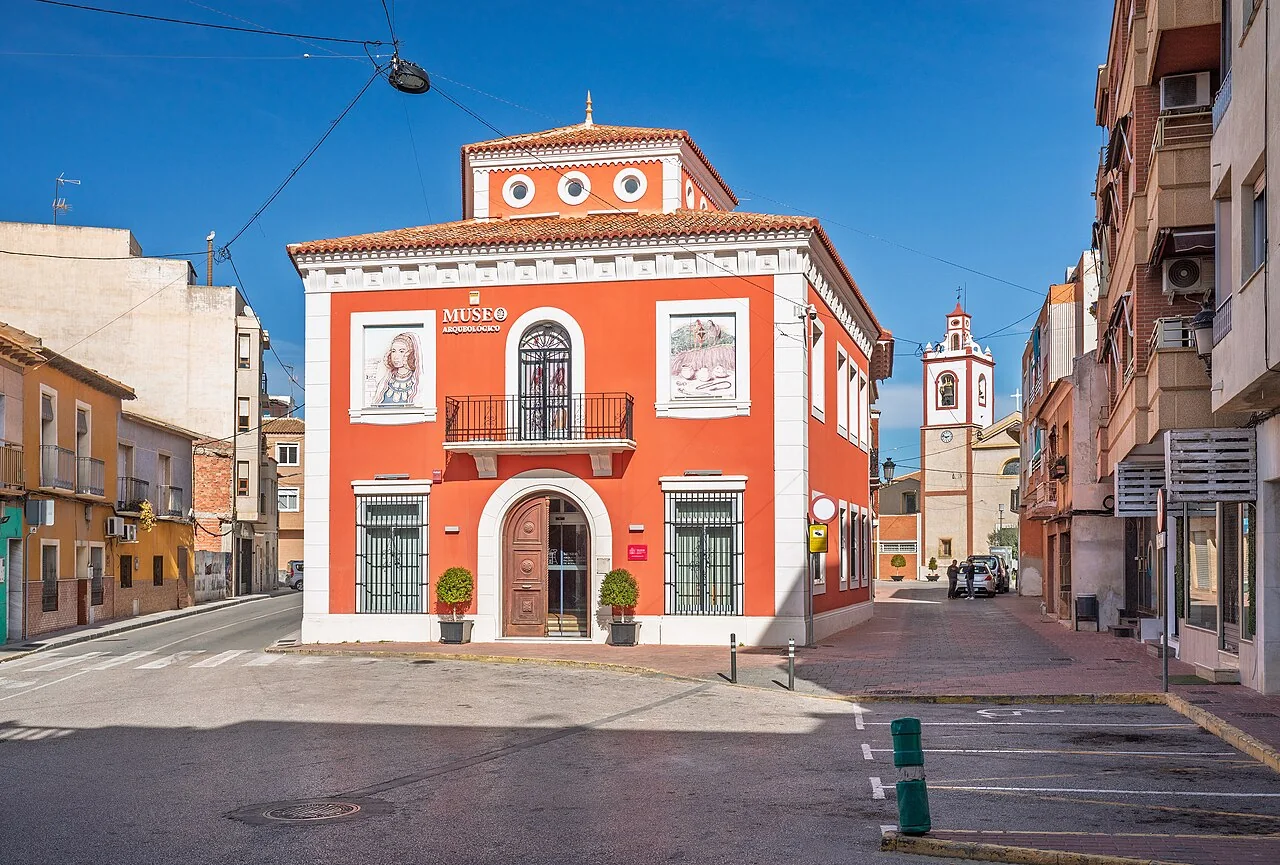
The photograph shows the red façade of Rojales Municipal Archaeology and Palaeontology Museum, with San Pedro’s tower behind; it does not show the Rodeo Caves. The building’s sign identifies it but does not establish which rooms or collections are accessible at any given time.
The museum orders evidence found locally
The collection brings together archaeological and palaeontological remains from Rojales and its surroundings to explain the cultures that shaped the settlement. Its approach is educational, connecting objects with ways of life, but interior visits and group activities depend on current opening and booking arrangements.
The Rodeo Caves form an excavated quarter
The caves were dug into the hill from the eighteenth century by Murcian miners who had arrived for agricultural work. They became homes and formed an underground street pattern used by generations until the early twentieth century. The Underground Habitat Ecomuseum and craft market occupy this sector south of town, separate from the photographed museum.
The river links bridge, weir, channels and waterwheel
The eighteenth-century Charles III Bridge is a three-span ashlar structure that joined the two parts of the town. Beside the Segura, the sixteenth-century weir raises water into irrigation channels and the wheel completes the system. Reading them as one hydraulic ensemble explains the market-garden landscape better than treating each as an isolated monument.
This documentary review corrects the image and separates museum, caves and river system. It does not verify opening, appointments, workshops, open rooms, floods, works, surfaces, ramps, railings, lighting, accessibility or heritage condition on site.
Related guides and local data
Sources consulted
- Ayuntamiento de Rojales — Museo Arqueológico y Paleontológico
- Ayuntamiento de Rojales — Cuevas del Rodeo
- Ayuntamiento de Rojales — Puente de Carlos III
- Ayuntamiento de Rojales — azud y noria
Documentary sources consulted on 31 August 2026. This is not an on-site inspection or a full check of opening hours, telephone numbers or accessibility. Any visiting conditions mentioned come from the linked sources.
The editing date records changes to the text, not a new check of opening hours, telephone numbers or accessibility. Specific verification dates, where recorded, appear beside the relevant information.