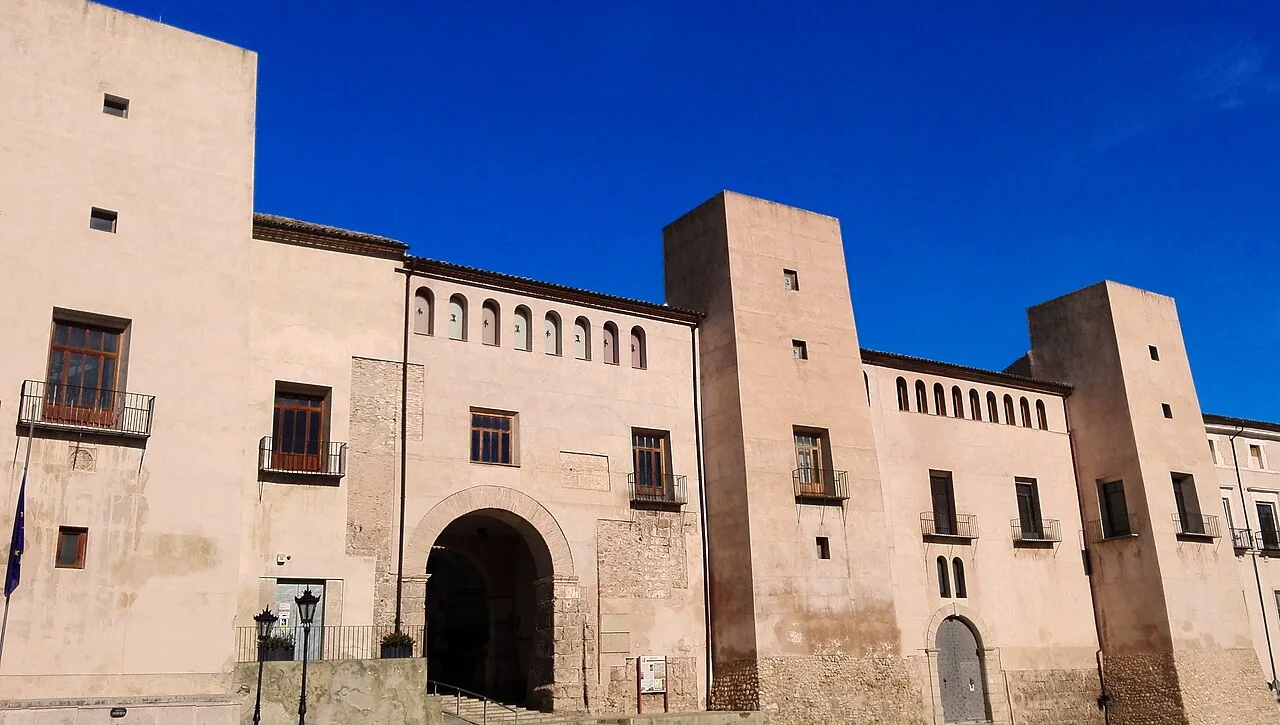
A balanced visit to Albaida should combine heritage, landscape and local life. Start with Palace of the Milà i Aragó family, move on to International Puppet Museum, and then add Archpriest Church of the Assumption and historic centre and walls. It can be explored at an unhurried pace, adapting the order to actual opening conditions and the weather. Combining the visit with nearby towns is worthwhile only when distances and opening conditions allow it.
What to see in Albaida
Palace of the Milà i Aragó family
The palace was built between 1471 and 1477, incorporating three towers from the earlier Muslim walls. Heraldic shields remain on its façades, while several interior rooms preserve late seventeenth-century Baroque paintings by the Albaida artist Bertomeu Albert.
International Puppet Museum
The MITA occupies a restored section of the palace and preserves, studies and presents puppetry from theatre, film and television. Its collections include characters from Valencian and national productions; confirm opening arrangements and visits directly with the museum.
Archpriest Church of the Assumption
The church shares Plaça de la Vila with the palace and forms part of Albaida’s principal monumental group. Check interior access and plan it together with the palace and the museums around the square.
Historic centre and walls
Plaça de la Vila brings together the palace, church, access to the José Segrelles House Museum and other cultural spaces. Beside the palace, the semicircular stone arch of the Gate of the Town, built in 1460, survives from the former walled enclosure.
Nature and local food
- agricultural valleys, inland mountains and stone-built towns
- oven-baked rice, cured meats and dryland produce
Practical information
Set aside a full morning or afternoon for the town and its immediate surroundings. In summer avoid the hottest hours, and check warnings and fire risk before nature walks.
Related guides and local data
Official sources and verification
The editing date records changes to the text, not a new check of opening hours, telephone numbers or accessibility. Specific verification dates, where recorded, appear beside the relevant information.