The lunch menu sent to families in the Valencian Community at the start of term should tell them more than which day rice is on the table. For the 2026-27 school year, meal plans must meet specific limits on fried food and ready-made dishes, include pulses every week and identify dishes and their allergens. Parents can use that information to check the service their child receives.
Royal Decree 315/2025 generally took effect on 16 April 2026. September marks the first full school year under these rules. They cover state schools, publicly funded private schools and independent schools in the stages listed in the decree, from the second cycle of early years education through upper secondary education and basic and intermediate vocational training. Early years provision for children under three falls outside its scope.
Fried food once a week, ready-made dishes once a month
For Monday-to-Friday lunches, the decree sets a maximum of one serving of fried food per week and one serving of ready-made dishes per month. The monthly limit does not mean that every croquette or filled pastry is banned: AESAN’s inspection programme distinguishes ready-made products from dishes prepared in the kitchen itself.
Fresh fruit must be served for dessert on four or five days a week. Pulses and vegetables each feature as first courses once or twice a week, while salads accompany the main course three or four times. Wholemeal bread is required at least twice a week, and wholegrain rice or pasta at least four times a month.
Main courses have minimum frequencies for fish, eggs and plant-based protein, alongside a ceiling of three meat servings a week. That ceiling is not a target. AESAN has clarified that reaching an upper limit cannot justify missing the minimum for another food group. The whole meal plan must work together.
The monthly plan must say what is being served
Information for families must name the dishes, explain how they are cooked and identify sauces, side dishes and allergens. Desserts must specify the variety of fruit or type of dairy product. Schools must also provide suggestions for evening meals that complement lunch and make this information easily accessible, including to families whose children only use the lunch service occasionally.
For pupils with allergies, intolerances or other conditions requiring a special diet, Article 10 provides for adapted menus supported by medical certification or, where applicable, suitable facilities to refrigerate and heat food supplied by the family. The arrangement needs to be agreed with the school before the child uses the service. Families must also receive the special menu plan.
The Valencian survey records opinions, not compliance
CODiNuCoVa’s Mengem Territori 2026 report, released in early September, found that 95.4% of the families surveyed had access to the monthly menu. Some 85% supported introducing foods less familiar to their children, such as pulses or broccoli.
More than a hundred families from schools across the Valencian Community took part: 43% from Alicante province, 29% from Valencia and 28% from Castellón. The report does not describe a sampling method that would justify applying those percentages to all families in the region. Nor does it audit the meals served in individual schools. It records participants’ willingness to accept changes to school lunches.
Food purchasing follows a different timetable
The requirements do not all start together. AESAN’s inspection programme places the practical application of Article 4’s criteria in the 2027-28 school year, while the menu-planning rules apply in 2026-27. Article 4 includes a minimum of 45% of fruit and vegetable servings being seasonal, along with organic food purchasing requirements. Those national provisions should not be presented as new obligations for this September.
The decree also states that implementing it must not increase the total cost of the menu for families.
Official checks are the responsibility of the competent authorities. If the plan omits allergens or cooking methods, parents can ask the school leadership and lunch-service manager for that information. When raising differences between the advertised menu and the food served, keeping the monthly plan and noting specific dates gives the school something concrete to respond to.
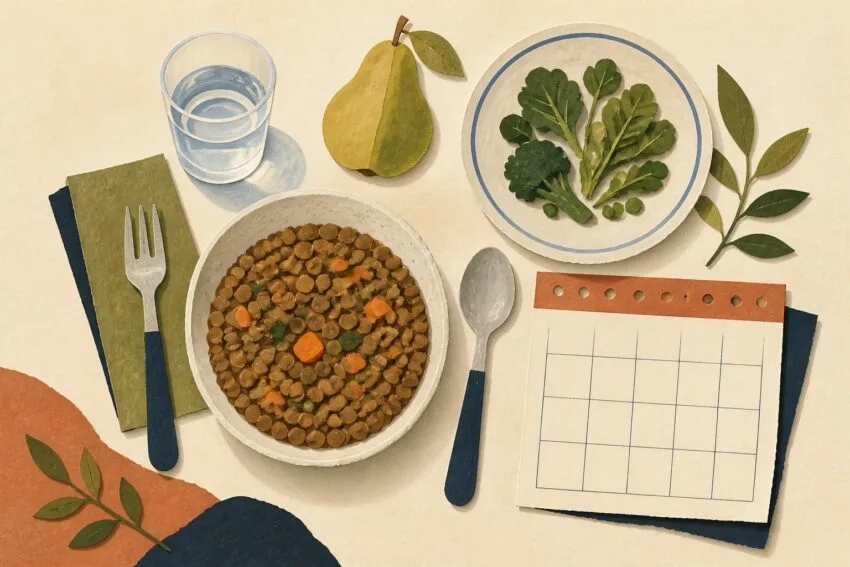
Original AI-generated editorial illustration for València Informada; it does not depict a meal served at an actual school.