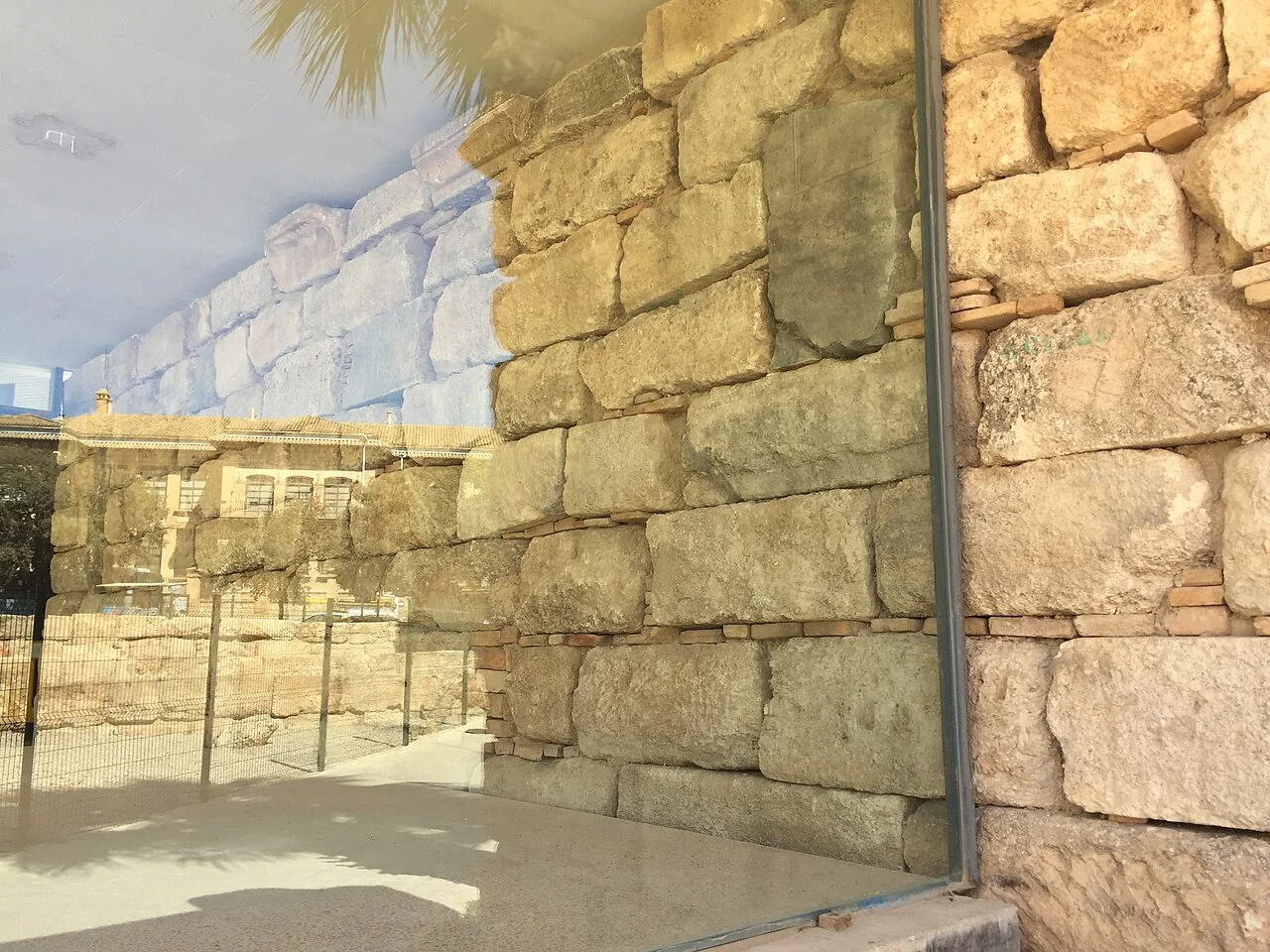
The photograph shows a wall of large ashlar blocks at the Roman Baths of Mura through a glass enclosure. Part of the square and nearby buildings is reflected across the stone; these are not archaeological structures. The frame records one protected sector rather than the complete baths.
Mura combined a sanctuary and baths
The site included an oracular sanctuary and two bathing buildings linked to water from the Sant Vicent springs. Its uses changed after the Roman period, and the space was occupied again in Byzantine and Visigothic times. A protective enclosure does not guarantee opening: the official listing notes rehabilitation works, so current access needs checking.
The mausoleums served a different Roman purpose
The Roman Mausoleums comprise two funerary buildings and an audiovisual interpretation area. They are not an extension of Mura’s pools, although both help explain the Roman town. Separating baths, sanctuary and funerary architecture avoids reducing centuries of history to one undifferentiated stop.
Edeta occupies Tossal de Sant Miquel
The Iberian city of Edeta developed on the hill from the sixth to the second century BC. Traces of streets, houses and defences explain a period before the Roman town. Its climb and arranged visits have different conditions from archaeological sites in the urban centre.
This documentary review identifies the wall and distinguishes Iberian, bathing and funerary heritage. It does not verify works, opening, arranged visits, projections, surfaces, glass, heat, gradients, railings, conservation or accessibility on site.
Related guides and local data
Sources consulted
- Turisme Comunitat Valenciana — Llíria
- Turisme Comunitat Valenciana — Santuario y Termas de Mura
- Turisme Comunitat Valenciana — Edeta y Tossal de Sant Miquel
Documentary sources consulted on 31 August 2026. This is not an on-site inspection or a full check of opening hours, telephone numbers or accessibility. Any visiting conditions mentioned come from the linked sources.
The editing date records changes to the text, not a new check of opening hours, telephone numbers or accessibility. Specific verification dates, where recorded, appear beside the relevant information.