Sourced guide
Setting and character
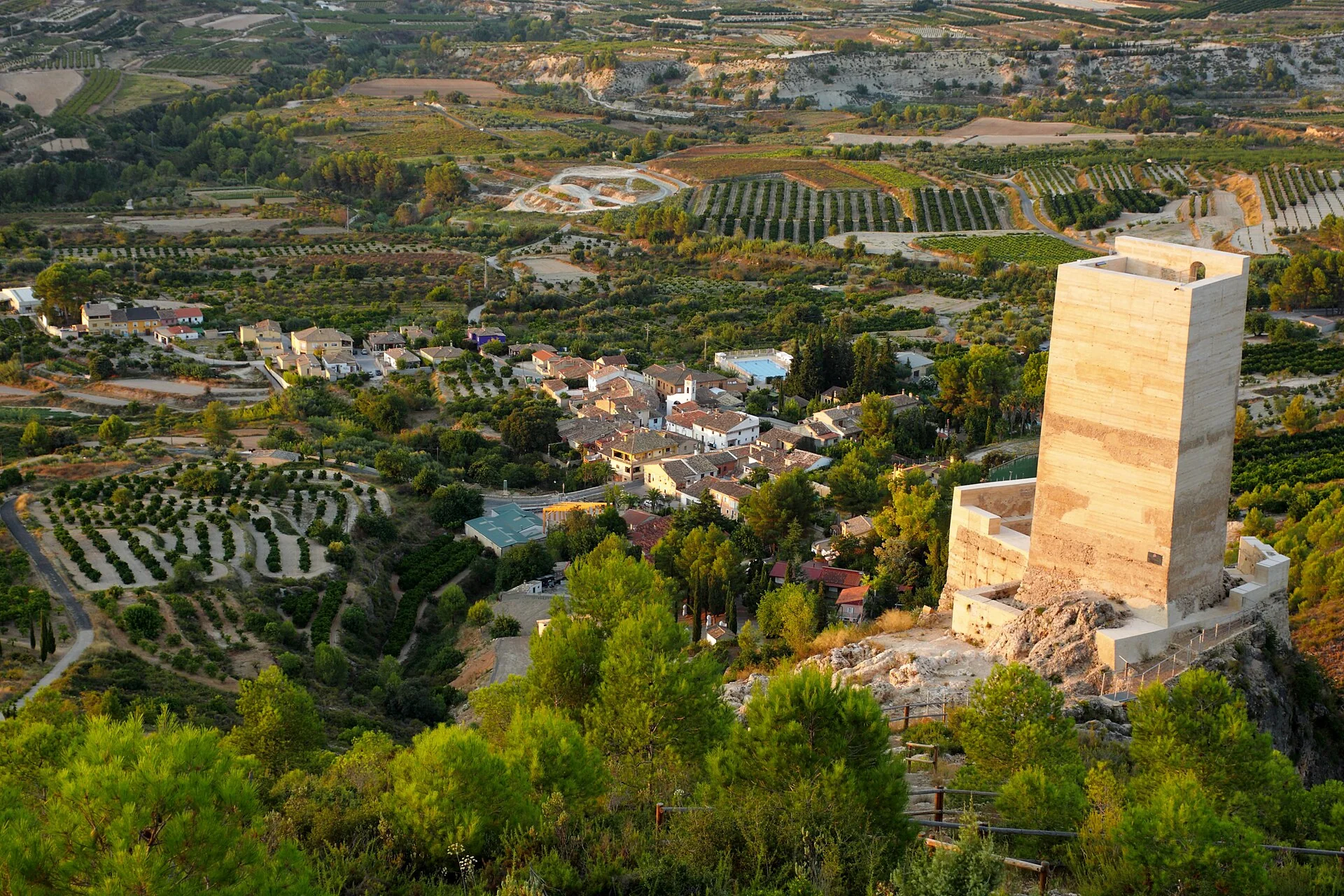
The photograph shows Carrícola castle tower on a rocky wooded slope. It neither shows the complete enclosure nor establishes structural condition, access or interior safety.
Documented heritage
The castle dates to the twelfth century, occupies a 415-metre hill and controlled territory. Its rammed-earth tower and courtyard are not a freely accessible viewpoint.
Landscape and territory
Biodivers Carrícola integrates 71 works by 58 artists in restored farming and castle ravines. Natural materials and landscape mean moving, touching or adding nothing.
How to organise the visit
Arches, pools, water boxes and weirs explain Andalusi capture and distribution. Sant Miquel church and Calvary chapel provide religious heritage separate from that system.
Food, boundaries and context
Check the castle climb and art circuit for weather and signs. Observe channels, artworks, slopes and crops from the permitted alignment without shortcuts. Carry water and turn back if the marked route or ground condition becomes unclear.
Responsible planning
When planning a visit to Carrícola, check the linked council or tourism page, the weather forecast and any notices about fire risk, works or festivities. Churches are not museums with permanent opening hours, while farms, terraces and houses mentioned may be private. Carry water and suitable footwear, avoid blocking narrow streets and never enter riverbeds, ruins or closed structures. Timing depends on gradient, mobility and stops, so keep the town walk separate from a mountain route or an outlying drive. Record a clear return point as well, and do not depend on an old photograph, an automated map pin or continuous mobile coverage for navigation. If conditions on the ground contradict this guide, always follow recent signs, municipal staff and emergency-service instructions. Also confirm the exact start and finish of every section mentioned, because one tourism listing may group places separated by roads, farmland or substantial height difference. If combining public transport with walking, check the last return before setting out. Take photographs only from permitted areas and leave crops, signs, stones, remains and devotional objects undisturbed. Save the official link so that any change made after this guide was written can be checked on site.
How to use this information
For Carrícola specifically, the linked sources support the names, dates and features used to explain the municipality, but they do not replace a real-time check. A heritage record may remain historically accurate even when access, signs or the building’s use changes. This guide therefore separates established facts from variable recommendations and does not promise admission, tours, toilets or food service. Where institutions provide different dates, they are treated as phases or the discrepancy is stated instead of being hidden.
When exploring Carrícola, accessibility differs greatly between a square, hermitage, viewpoint and trail. Anyone needing step-free routes, adapted public transport or accessible toilets should confirm them with the council before travelling. Bus frequency, taxis and charging points can also vary in small villages. Save useful contact details, download a map before leaving the settlement and allow enough daylight to return. No scenic reference is permission to cross private property or continue in poor weather. Confirm the exact meeting point and return option rather than relying on a photograph, an old timetable or an automatically generated map pin.
Frequently asked questions
How much time should I allow?
For Carrícola: Allow roughly one to four hours for the settlement and plan the described routes or outlying sites separately.
Are interiors and natural sites always accessible?
For Carrícola: No. Confirm opening times, permission, trail condition and restrictions through official sources before travelling.
How is this different from a generic template?
For Carrícola: Every place, date, image and municipal boundary has been checked for this municipality, with the supporting sources linked below.
Related guides and local data
Official sources and verification
The editing date records changes to the text, not a new check of opening hours, telephone numbers or accessibility. Specific verification dates, where recorded, appear beside the relevant information.